8,948 people live in Ladue, where the median age is 48.4 and the average individual income is $176,818. Data provided by the U.S. Census Bureau.
Total Population
Median Age
Population Density Population Density This is the number of people per square mile in a neighborhood.
Average individual Income
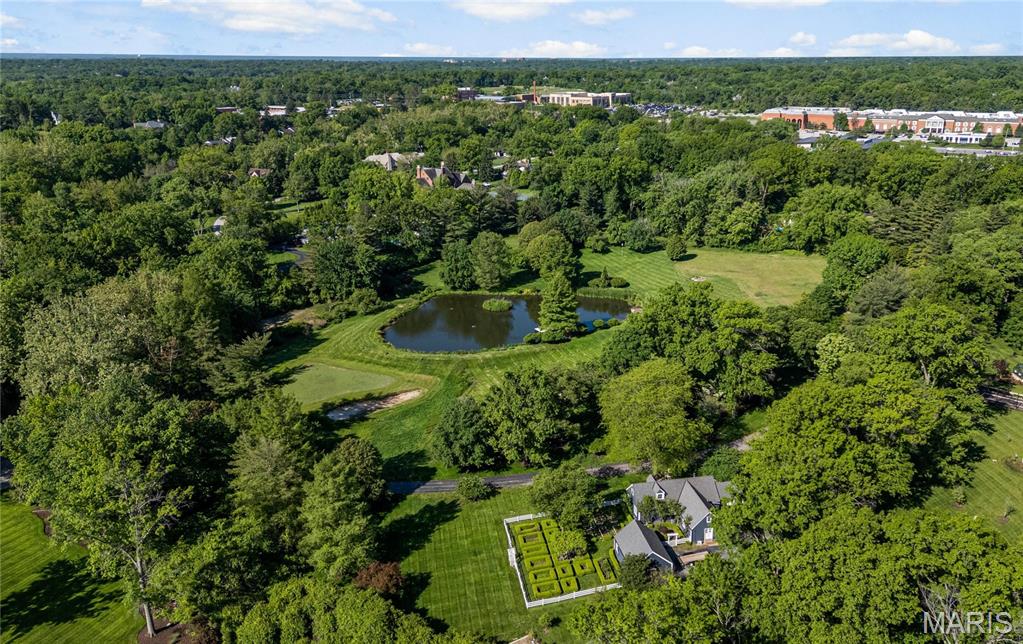
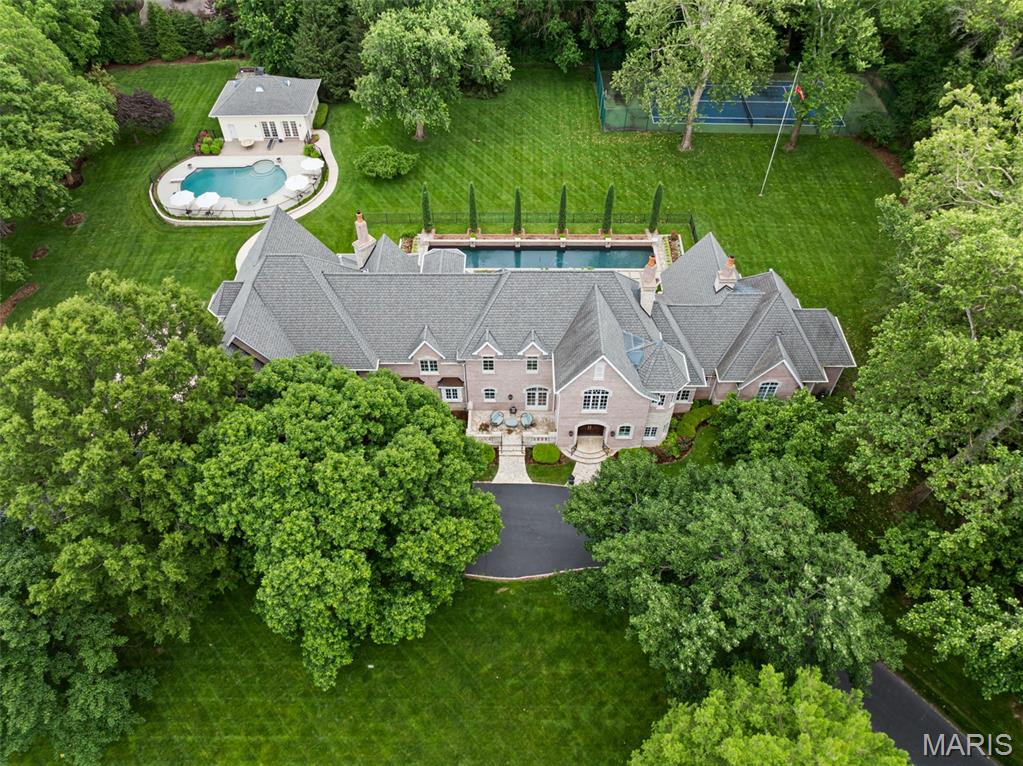
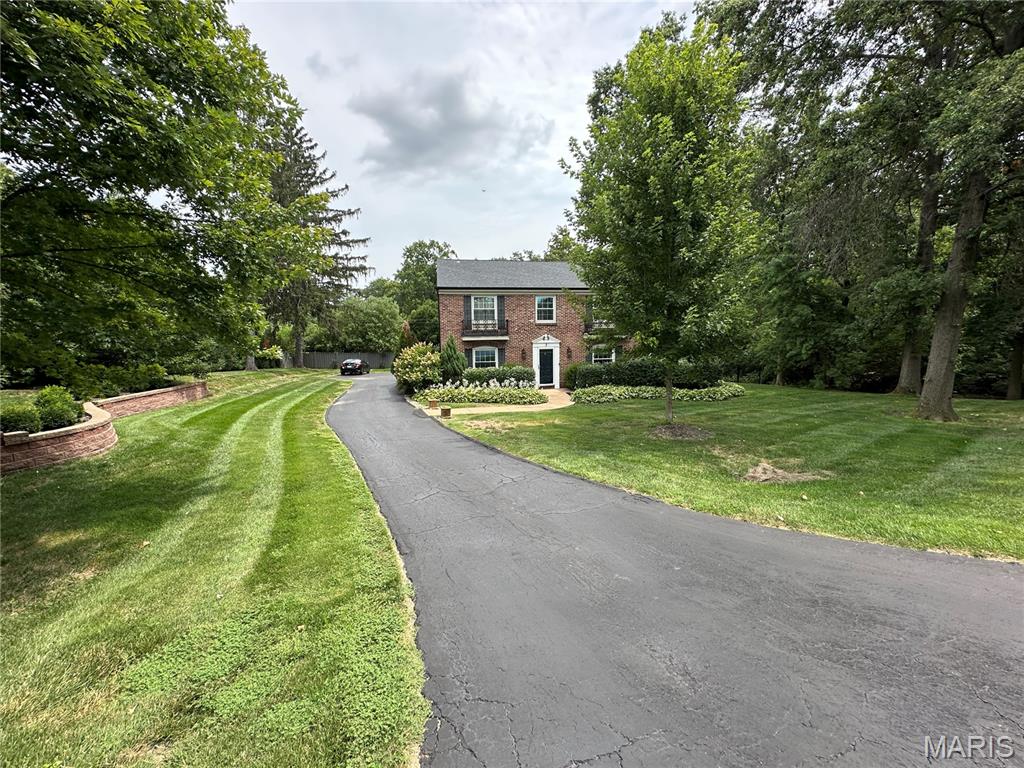
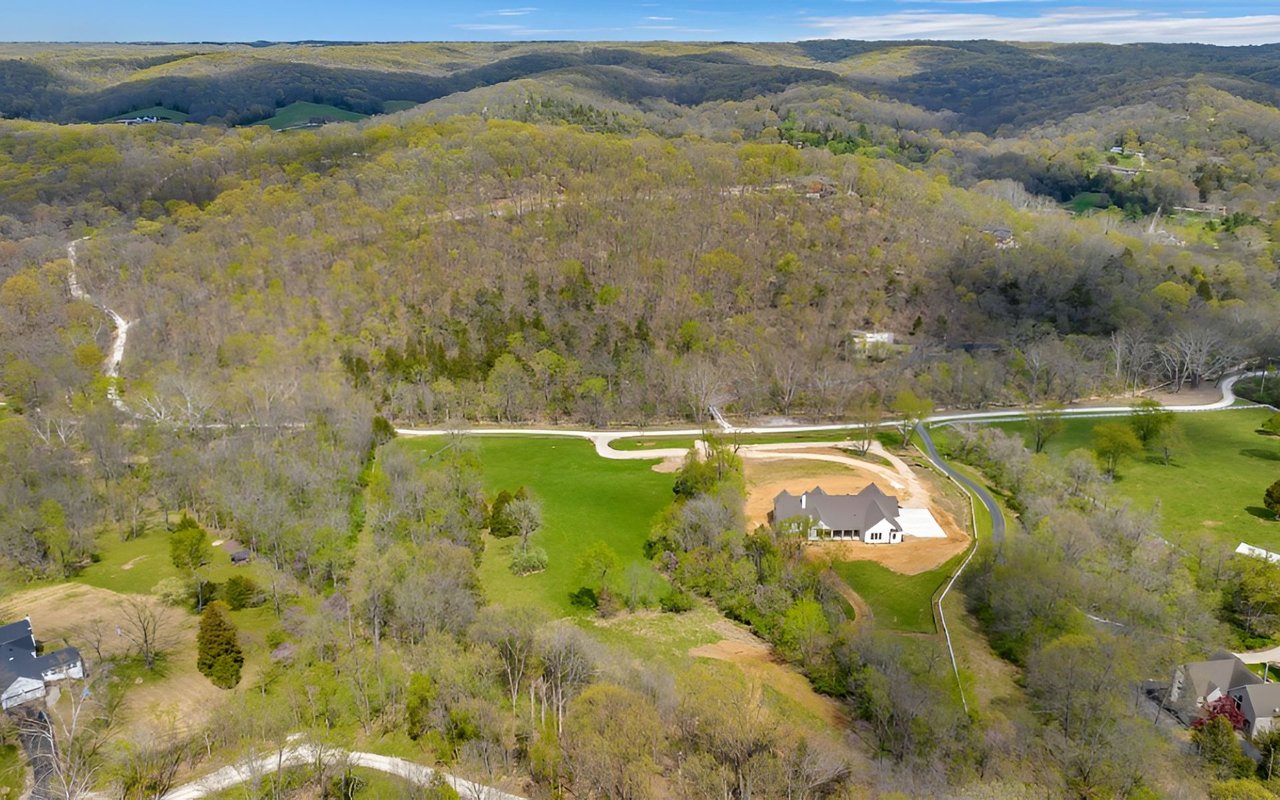
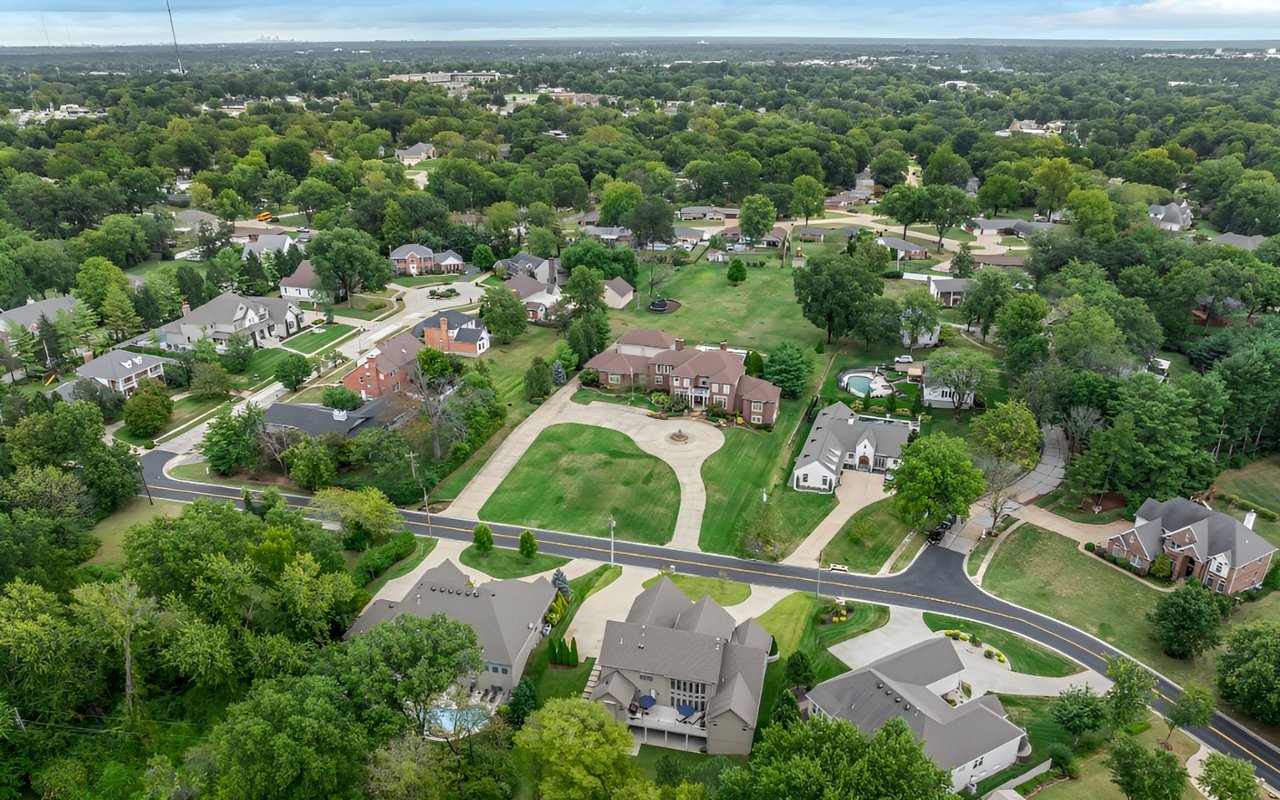
If St. Louis County has a definitive address for established wealth, it is Ladue. Tucked into the geographic center of the metro just west of Clayton, this small city of roughly nine square miles has spent a century cultivating something most affluent suburbs only imitate: genuine quiet. There are no strip malls sprawling across its main roads, no dense townhome tracts, no MetroLink platform humming at the edge of a subdivision. What you find instead are winding lanes shaded by old-growth oaks, brick and stone estates set well back from the street, and a pace of life that feels deliberately unhurried.
Ladue's identity is built on space and discretion rather than show. The homes are substantial, but the culture is understated—this is a community where prestige is assumed rather than advertised. That character is not accidental. Strict zoning, an active Architectural Review Board, and subdivision indentures have protected the city's low-density, park-like feel for generations, which is precisely why demand here never really cools. For buyers who want top-ranked schools, sub-fifteen-minute access to the region's employment centers, and a genuinely private place to raise a family or settle into, Ladue remains the benchmark against which every other St. Louis suburb is measured.
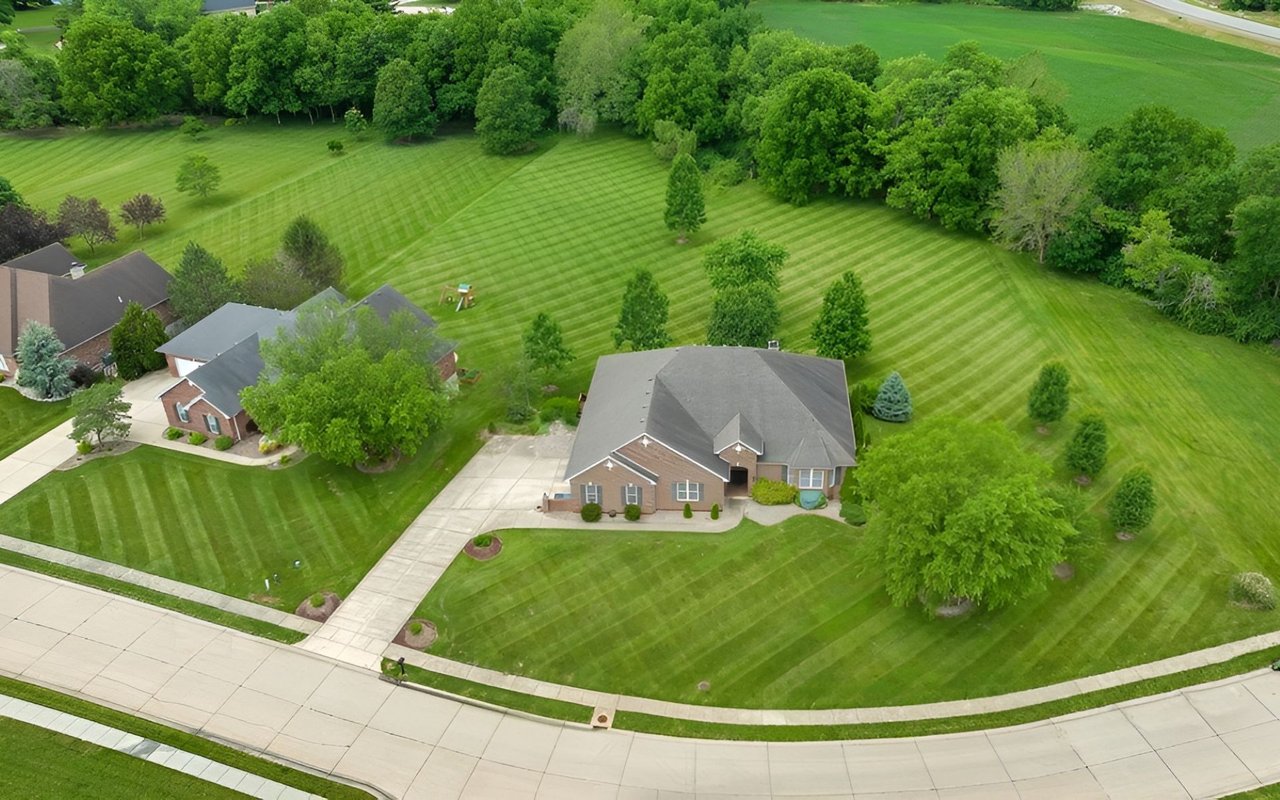
Ladue operates as one of the tightest luxury micro-markets in the Midwest, and understanding its rhythm is the first step to buying or selling successfully here. Housing stock is almost entirely high-end single-family homes on generous, wooded lots—there is very little else, and very little new land to develop, which keeps inventory perpetually scarce and demand steady.
Median home values generally fall between $1.3M and $1.7M, though that figure conceals enormous range. Premium estates in the most exclusive pockets routinely trade from $3M into the $5M-plus territory, while original mid-century homes purchased primarily for their land can sit below the median. Price per square foot averages roughly $340–$395, and turnkey homes that are priced correctly move fast—often selling within 7 to 25 days and frequently drawing multiple offers at or above asking.
One feature that surprises newcomers is the role of the Ladue Architectural Review Board (ARB). Every significant exterior change—additions, teardowns, new construction—passes through municipal review to protect the scale and character of each streetscape. It is one of the reasons the city looks and feels the way it does, and, as covered further below, it is something every buyer with renovation plans needs to factor in before writing an offer.
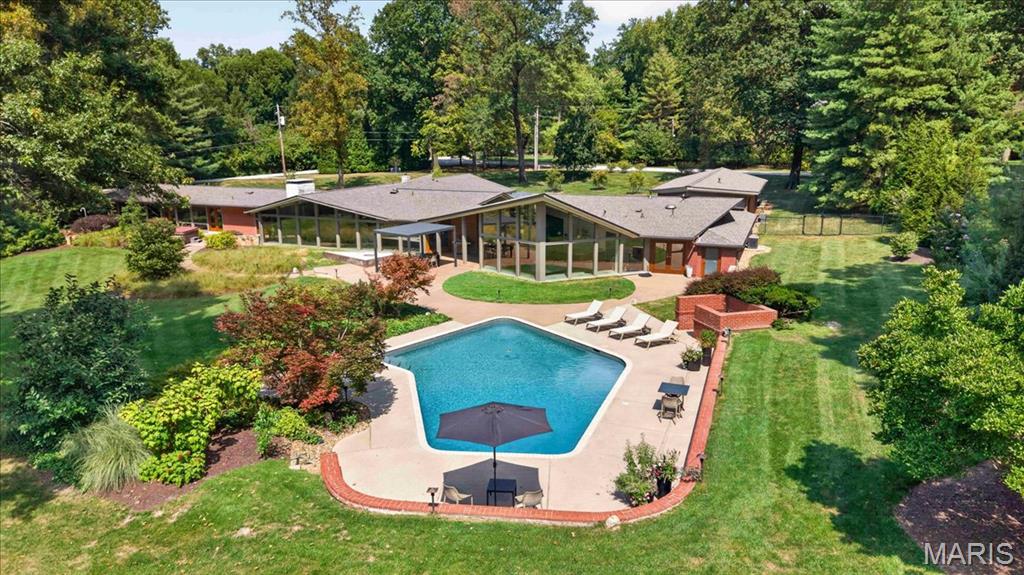
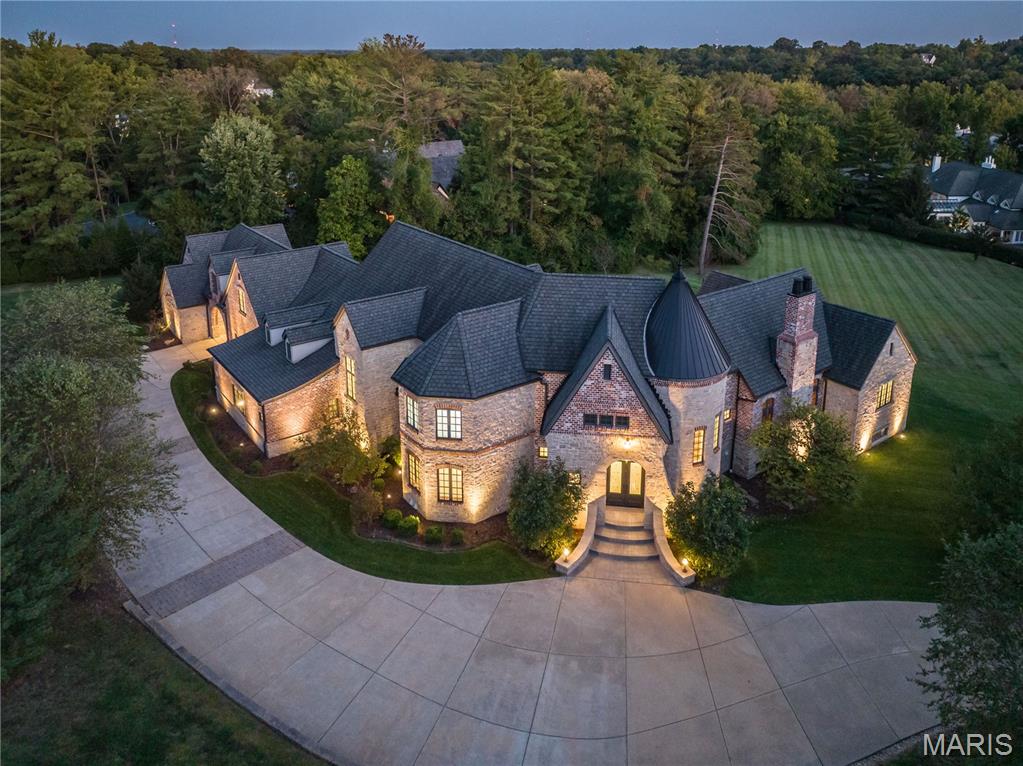
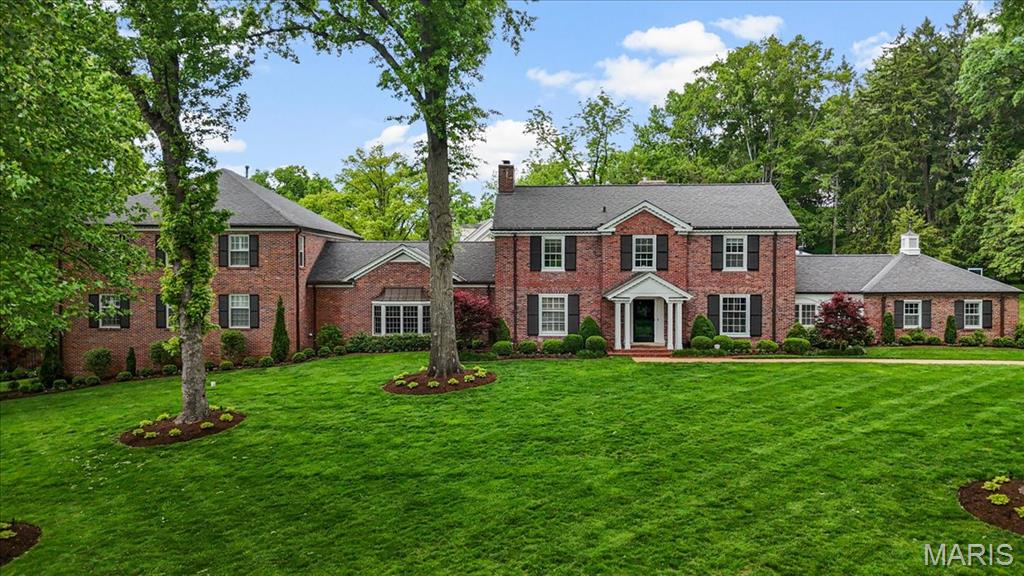
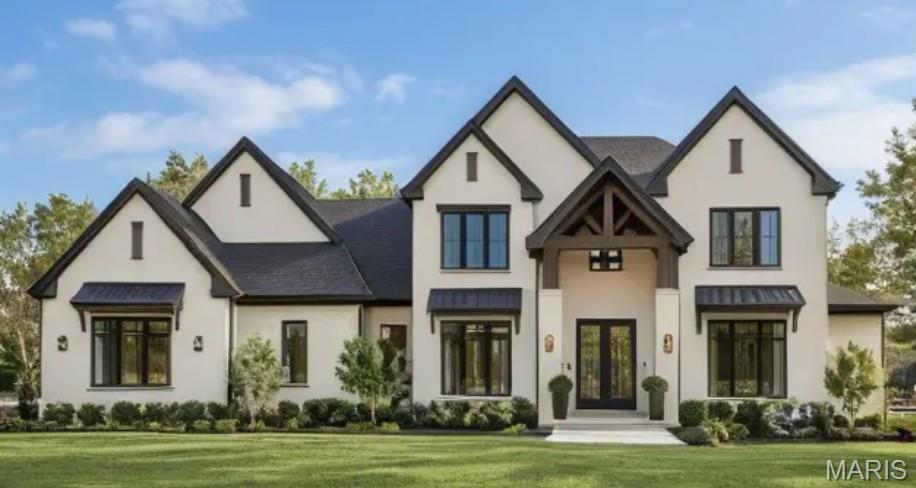
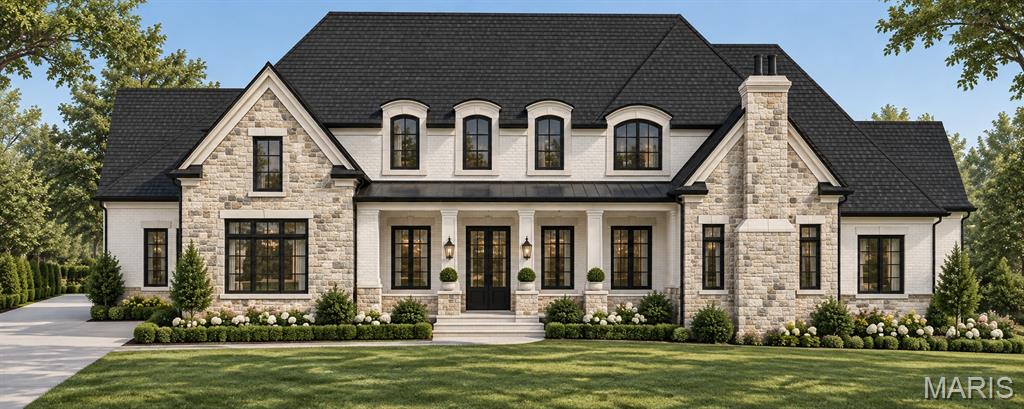
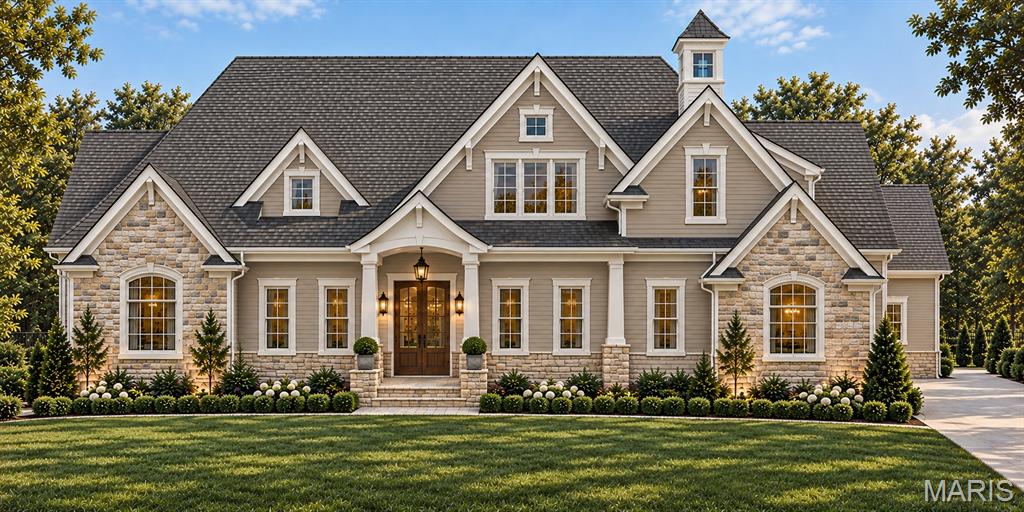
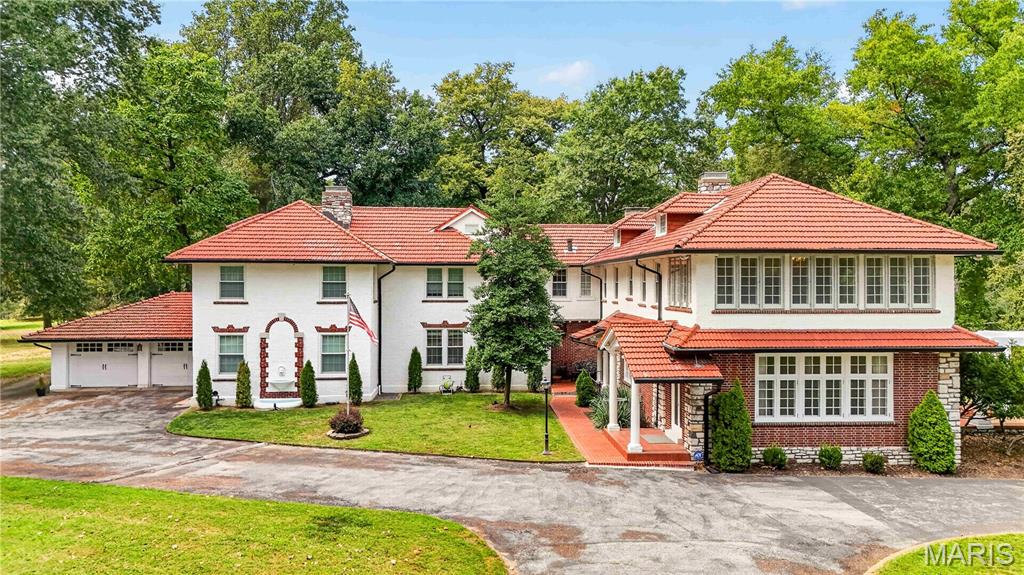
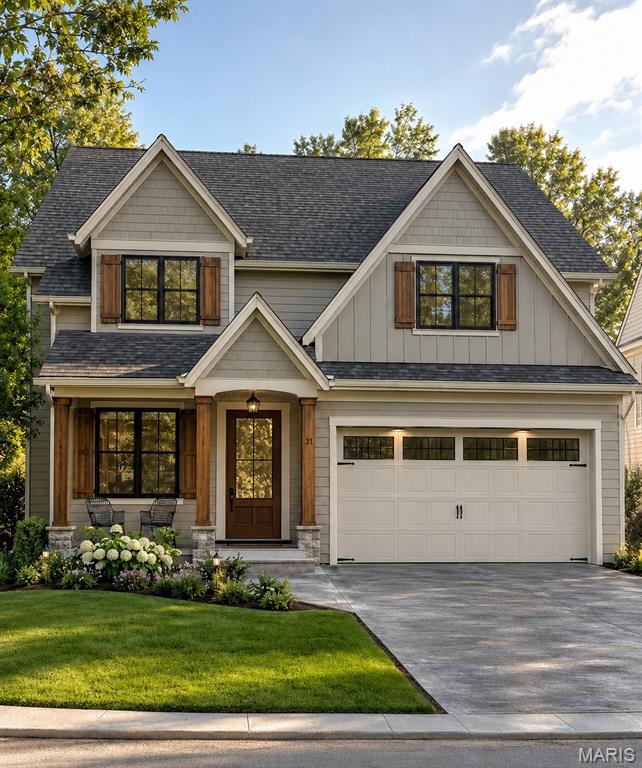
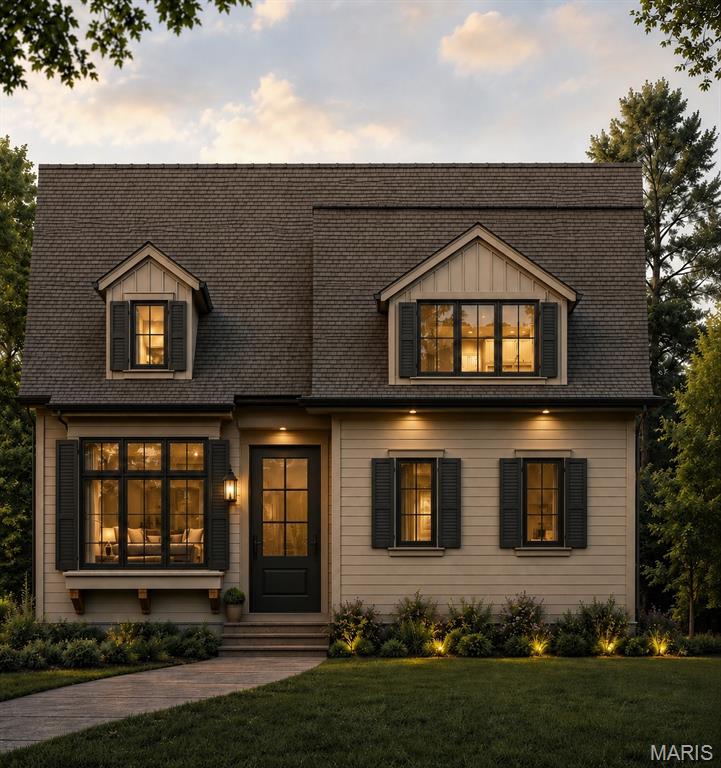
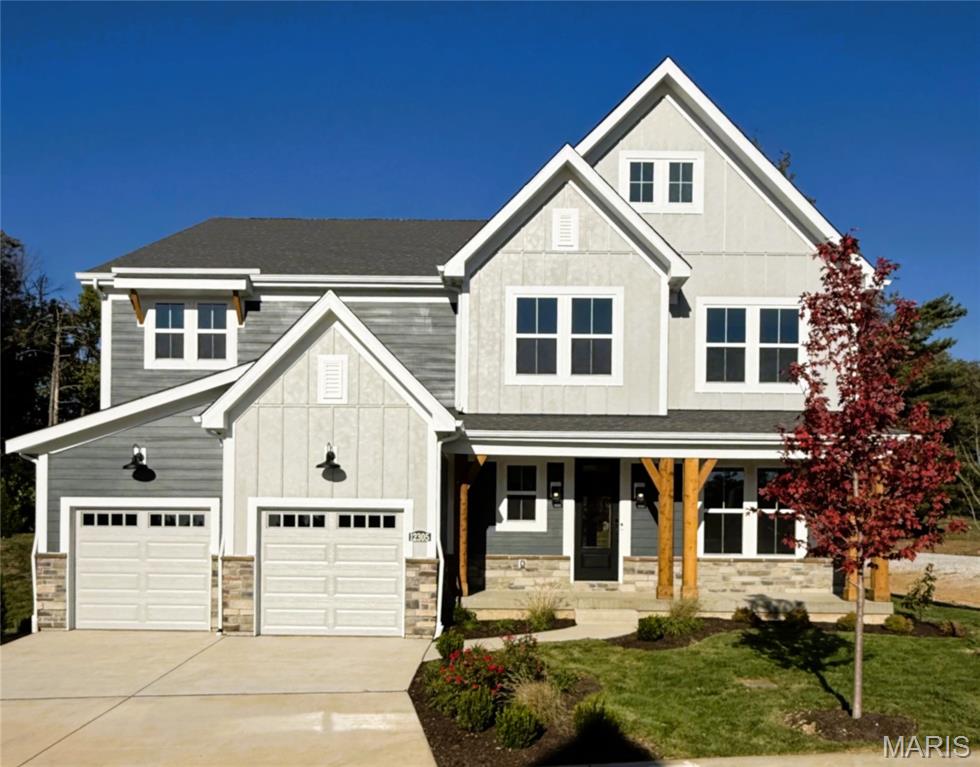
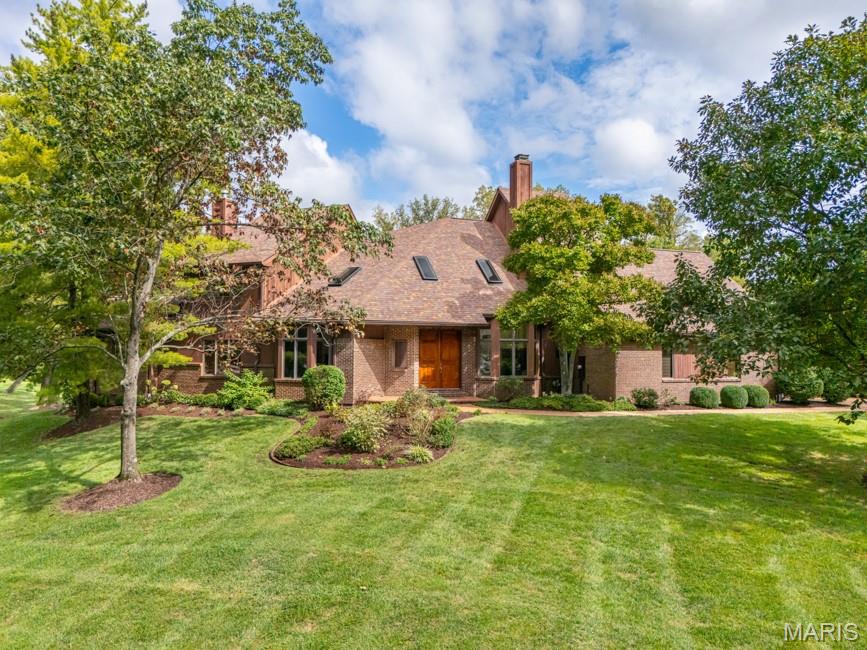
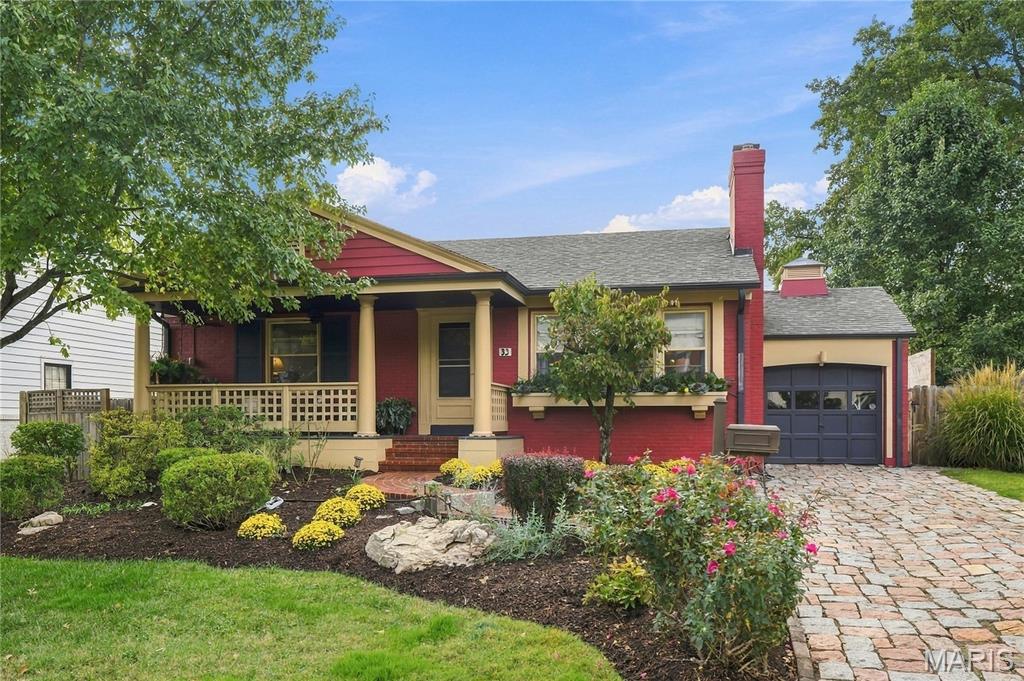
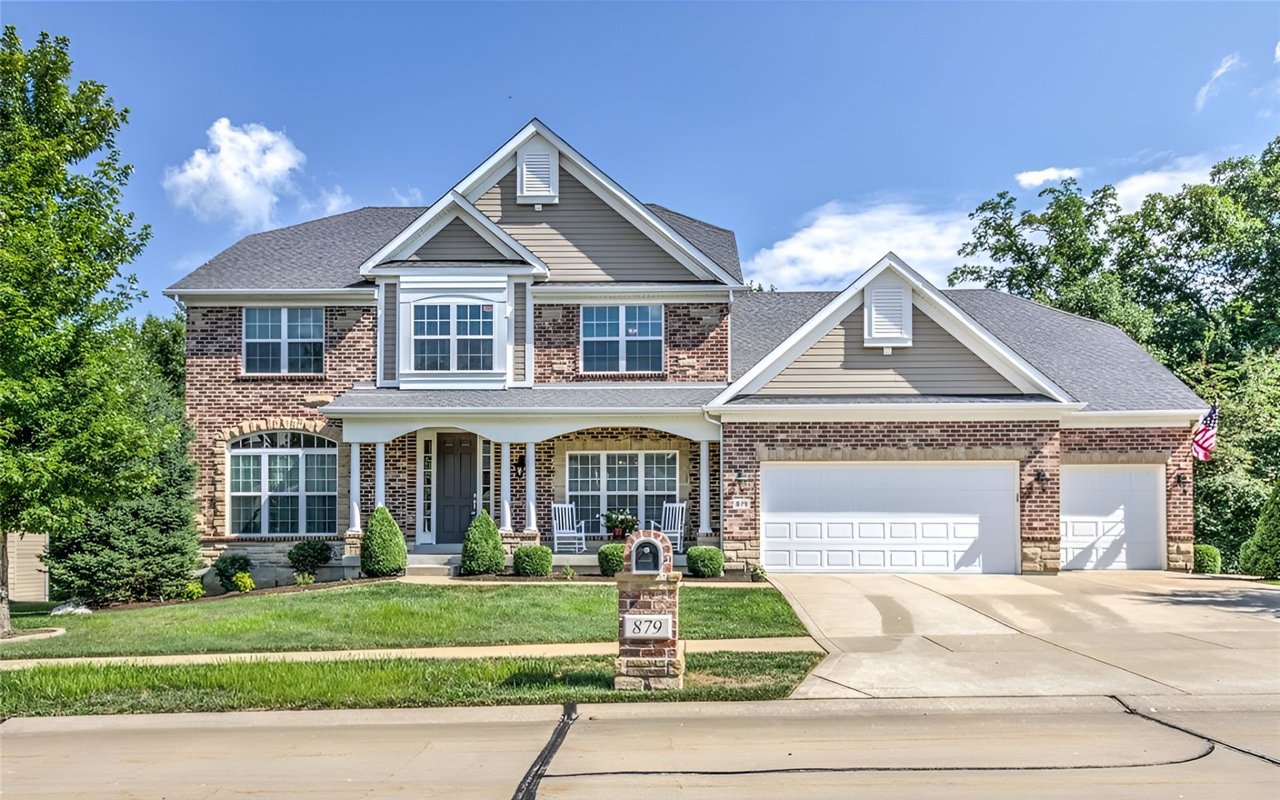
Part of what makes Ladue feel timeless is that it was never mass-produced. Instead of repeated floor plans marching down a cul-de-sac, the city reads like a slow accumulation of individual statements—historic European-inspired estates beside stately revivals, sprawling mid-century ranches, and a growing layer of contemporary custom infill. Grand lots, mature tree canopies, and substantial masonry construction tie it all together.
A few signature styles define the streetscape:
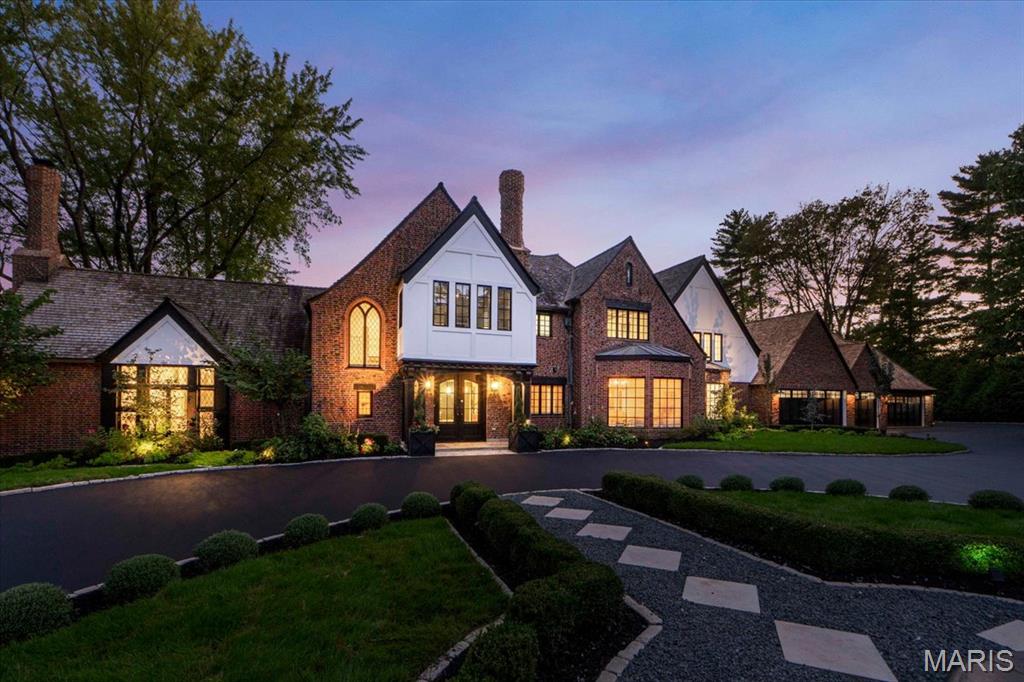
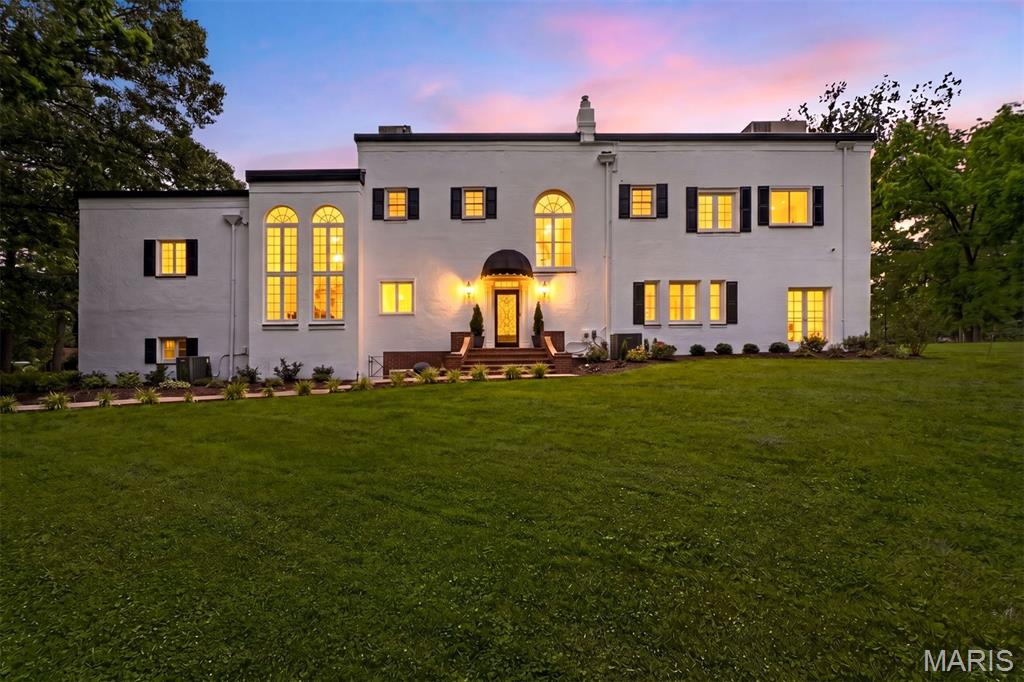
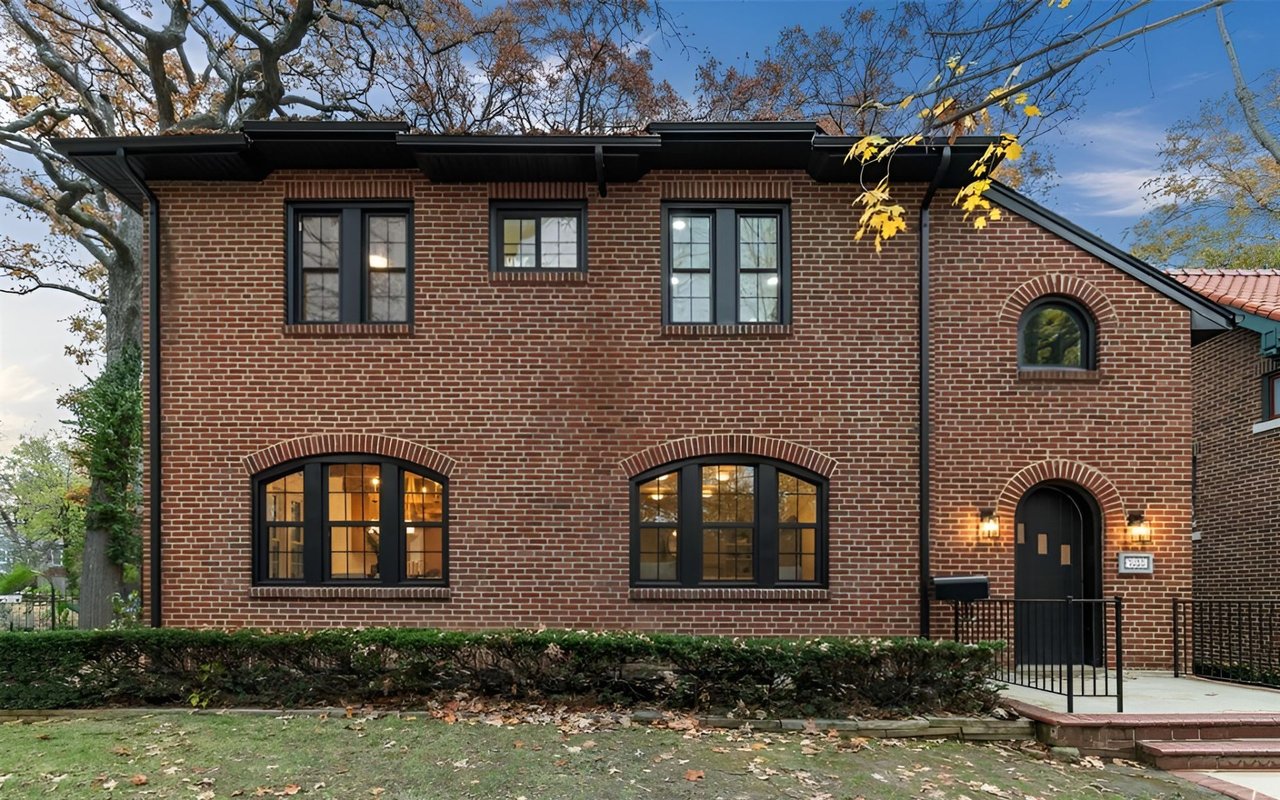
Tudor Revival is one of Ladue's classic estate looks—steep rooflines, prominent front gables, decorative half-timbering, and heavy stone-and-brick facades that give these homes real street presence and traditional, well-defined interiors. Colonial Revival and Georgian homes bring symmetrical facades, multi-pane windows, central porticos, and formal entry halls, delivering the balanced, timeless curb appeal many buyers picture when they imagine Ladue. French Country and European Manor designs, popular among both historic estates and newer custom builds, lean on tactile materials—tumbled stone, timber-framed porches, slate-style roofs, and vaulted parlors that flow into indoor-outdoor entertaining spaces.
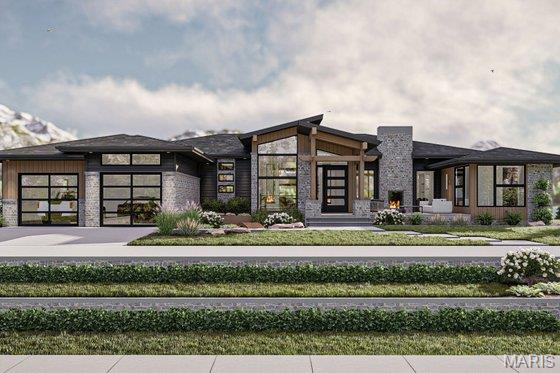
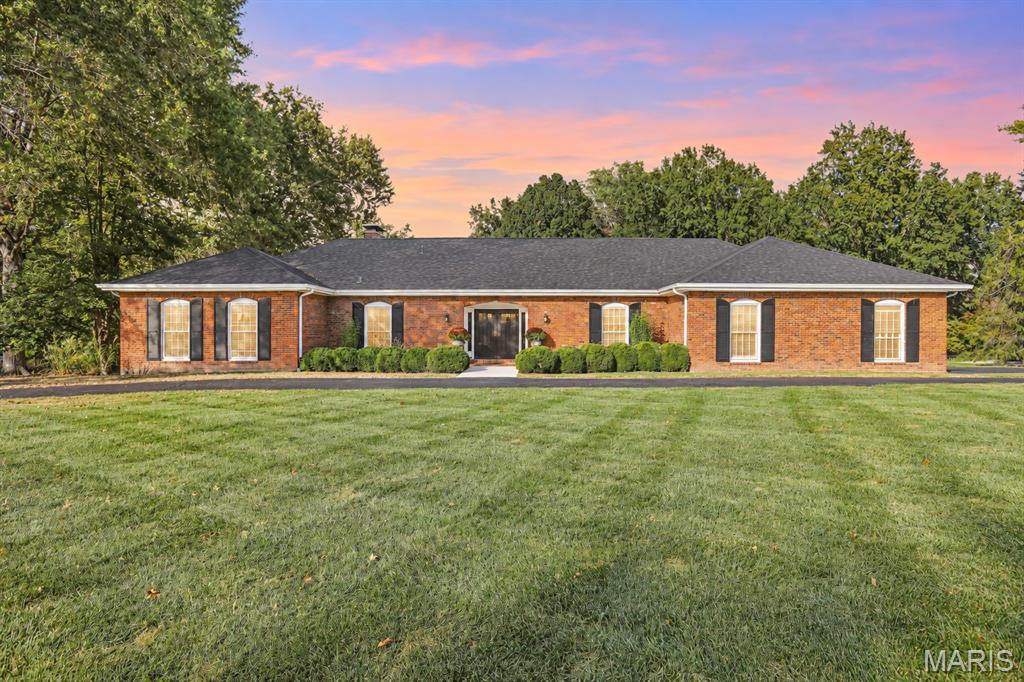
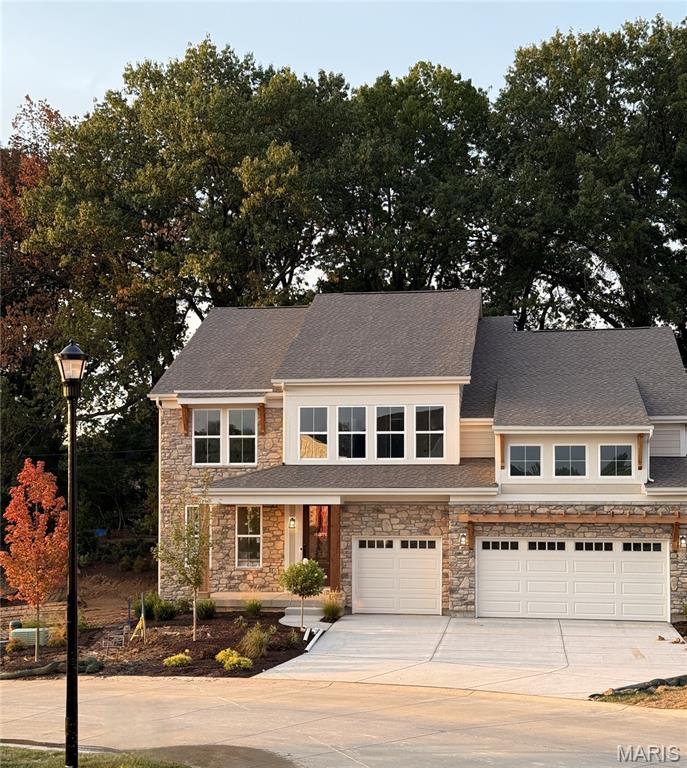
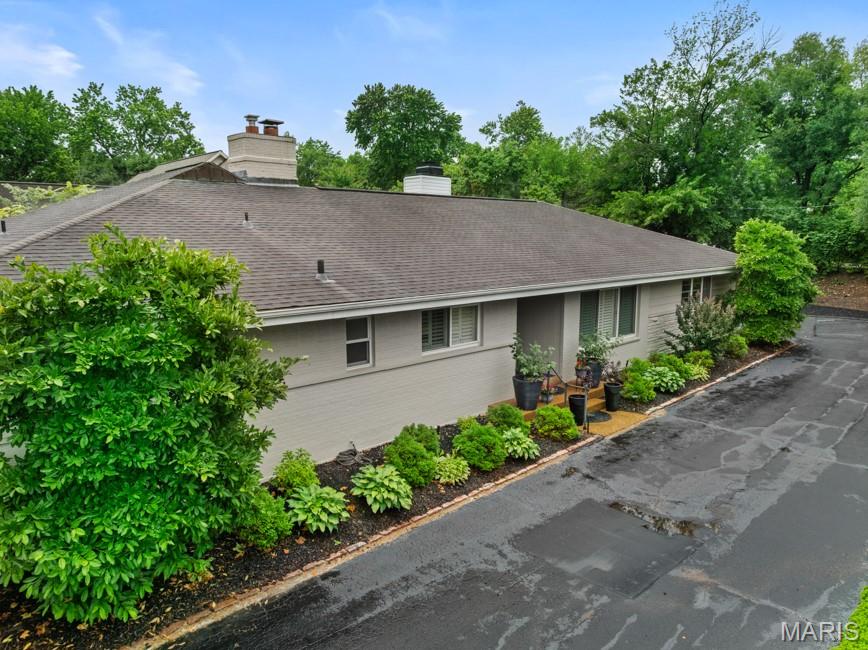
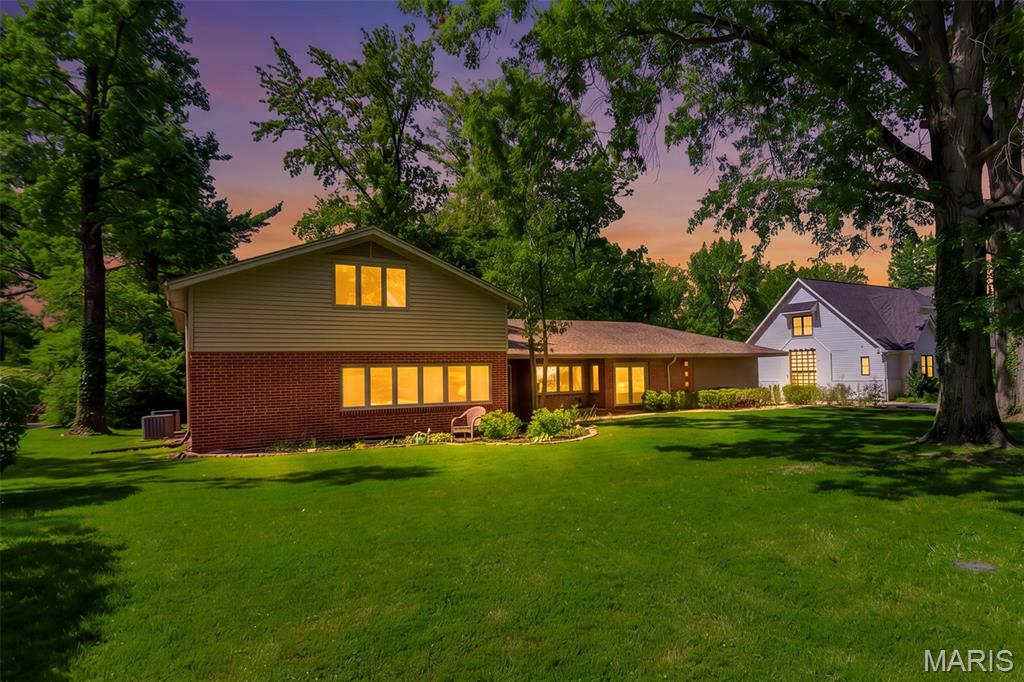
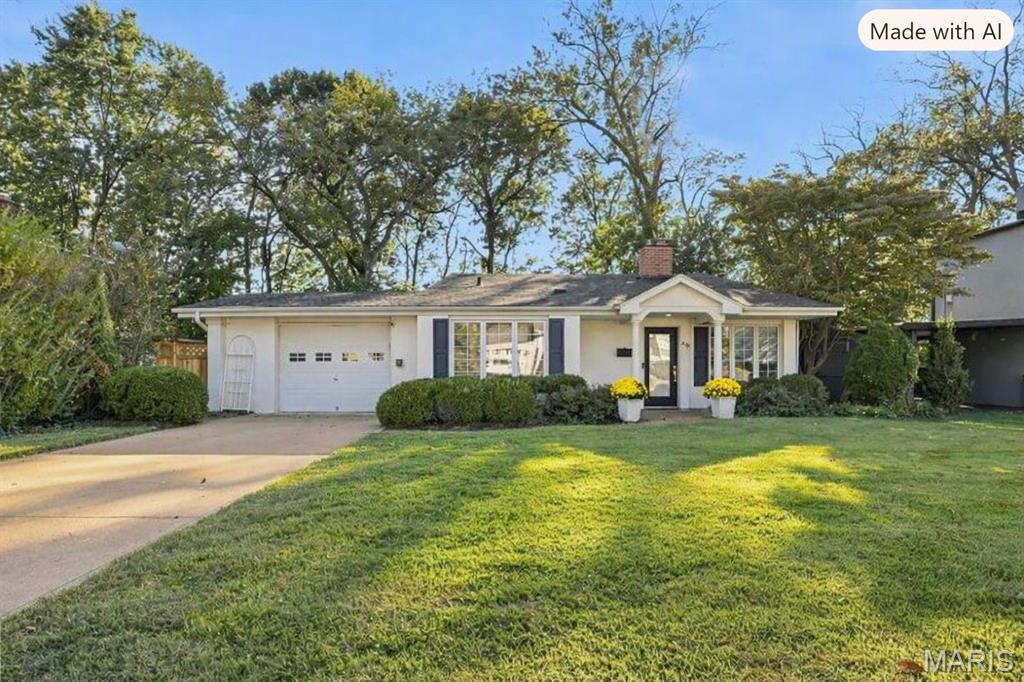
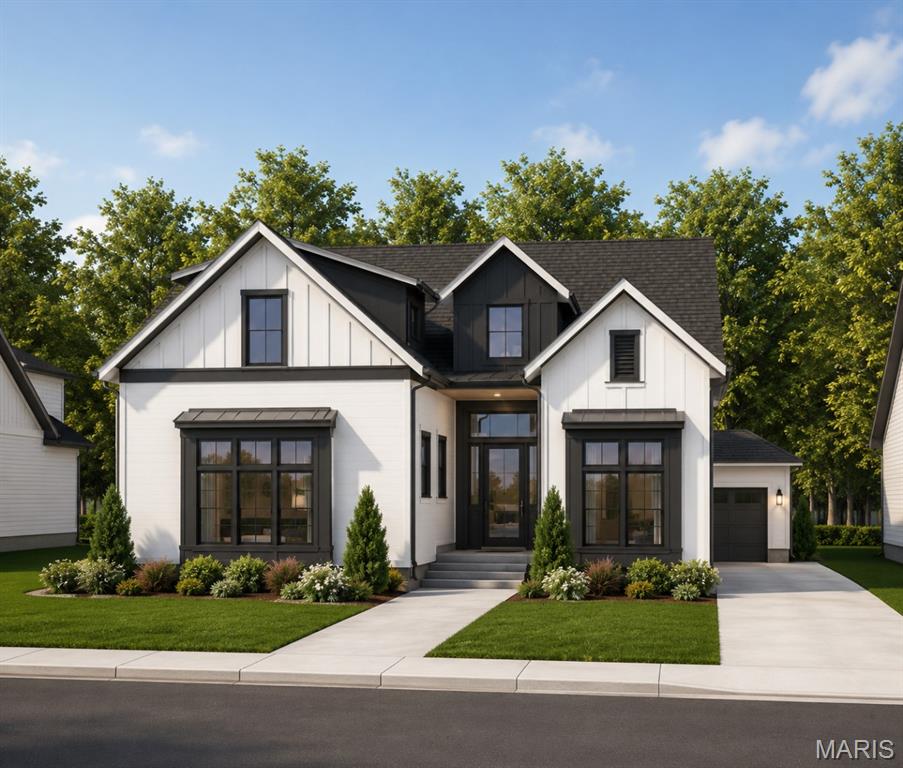
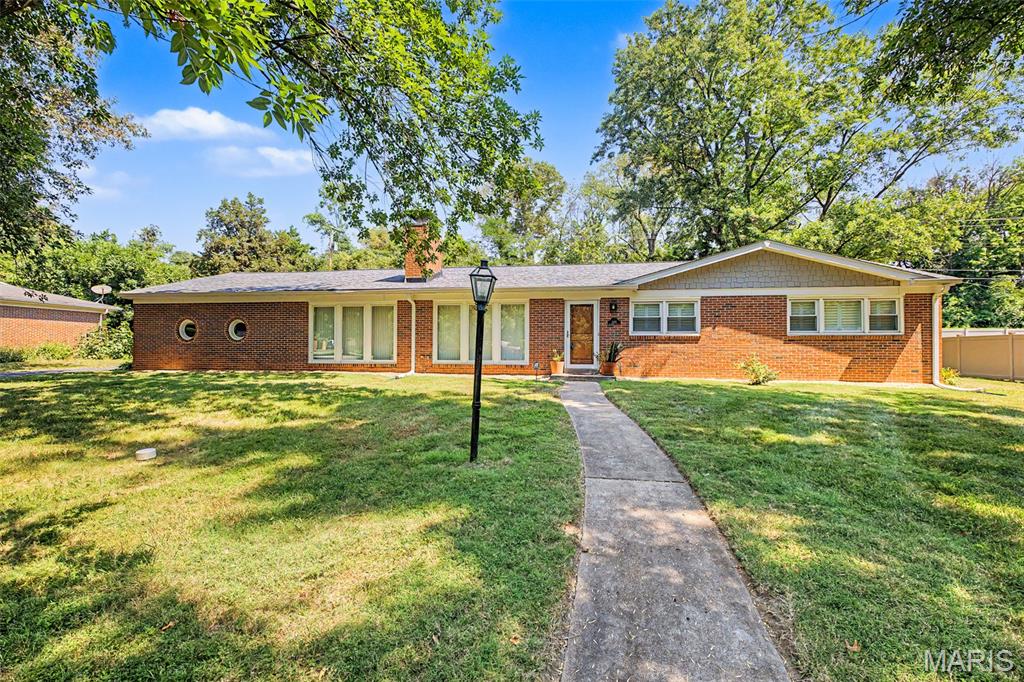
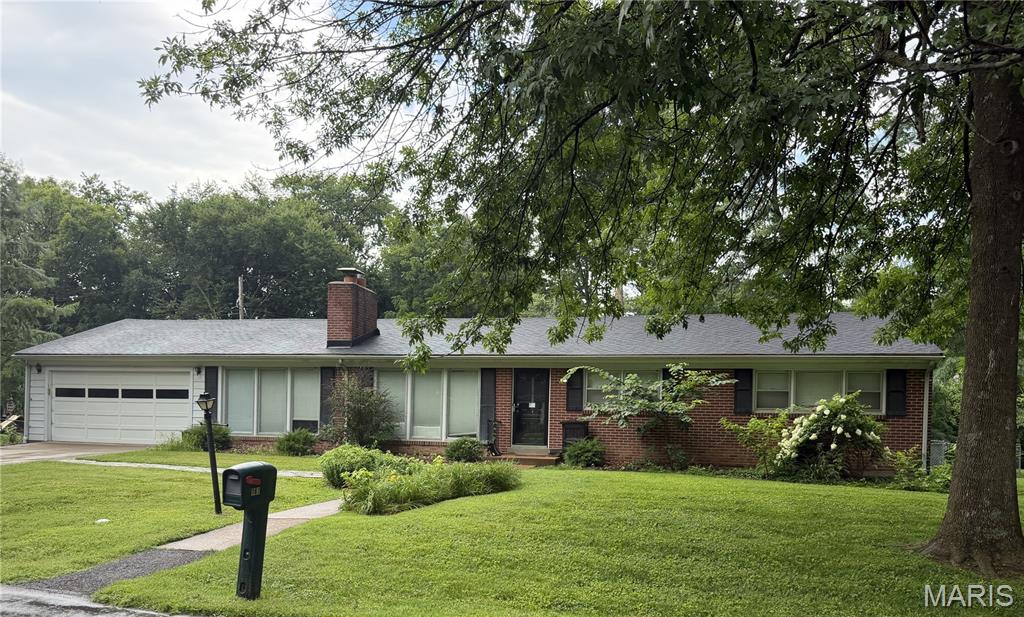
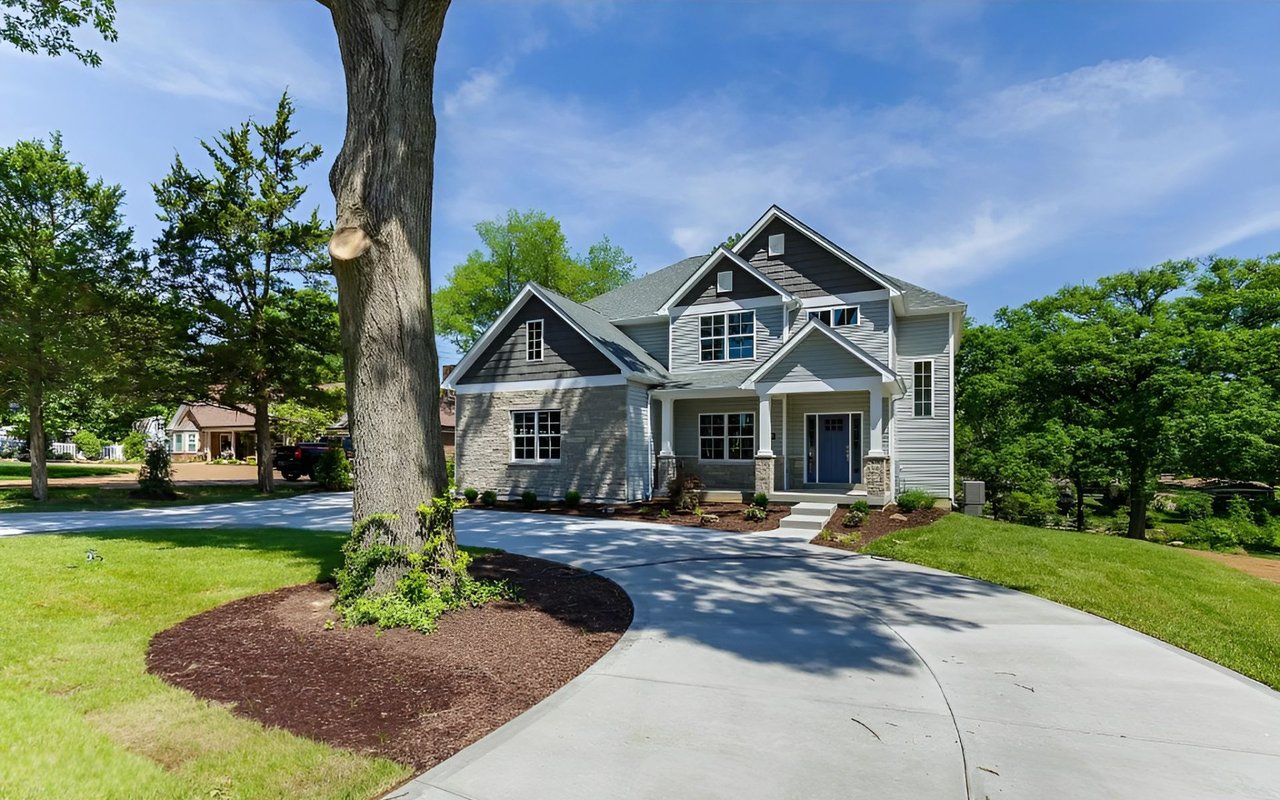
Alongside these, expansion ranches on acre-plus lots are common; many mid-century originals have been reimagined with second-story additions, walls of glass, and open floor plans. And modern custom infill continues to appear, pairing clean contemporary interiors with the traditional exterior masonry the ARB expects so that new homes settle comfortably into their surroundings.
For a great many families, the school district is the reason the search begins and ends in Ladue. The Ladue School District is consistently ranked the number-one public district in Missouri, and it uses a distinctive grade-level structure that sends children through a series of specialized centers rather than a single K–8 track.
Younger students attend one of four elementary schools based on neighborhood boundaries—Conway on Conway Road, Reed on Ladue Road, Spoede on Spoede Road, and Old Bonhomme, which sits in neighboring Olivette and serves part of the district. From there the path is unusually structured: all fifth graders converge at the dedicated Ladue Fifth Grade Center, a transition year designed to bridge elementary and middle school, before moving on to Ladue Middle School for grades six through eight. The district's flagship is Ladue Horton Watkins High School, nationally recognized for AP performance, championship athletics, and recently expanded STEM facilities.
Ladue is also home to a remarkable concentration of elite private schools. MICDS (Mary Institute and Saint Louis Country Day School) occupies a 100-plus-acre campus off Warson Road and serves JK through 12. John Burroughs School, a top-tier co-ed college-preparatory school for grades 7–12, sits on South Price Road. Rounding out the options are Community School, a highly regarded independent program for ages three through grade six, and Annunziata, a Catholic elementary on Clayton Road. Few suburbs anywhere offer this depth of public and private choice within their own borders.
Ladue is best understood not as one neighborhood but as a collection of quiet, distinct pockets—private lanes and historic subdivisions, each with its own scale and personality. Because dense development is essentially prohibited, the differences between them come down to lot size, setting, and architectural flavor rather than density or price tier alone. The table below is a useful orientation for buyers trying to match a lifestyle to a location.
Subdivision / Pocket | Typical Lot Size & Feel | Architectural Highlights |
|---|---|---|
Old Warson / South Warson Corridor | 2–5+ acres; ultra-exclusive, semi-private drives around Old Warson Country Club | Multi-million-dollar custom estates, European manors, grand historic grounds |
Lindworth & Lindworth Estates | 0.75–1.5 acres; central, mature trees, high demand | Georgian, Colonial Revival, high-end modern rebuilds |
La Hacienda | 0.5–1 acre; established, winding roads near top schools | Expanded mid-century ranches with Spanish and Tudor accents |
Clayton Road Park & Conway Enclaves | 1–2+ acres; near Clayton Road shops and clubs | Stately brick Colonials, French Country manors, classic stone homes |
Exmoor & Fieldcrest | 0.5–1 acre; peaceful, walkable, neighborly | Traditional brick homes, cape cods, sprawling single-story layouts |
Warridge & Alpine Park | 1.5–3+ acres; secluded, heavily wooded, maximum privacy | Substantial luxury builds and legacy estates |
The practical takeaway is that Ladue rewards buyers who know what they want from their surroundings. If seclusion and acreage are the priority, the Warson corridor and Warridge deliver it; if you want to be near shops and a more social street life, the Clayton Road enclaves and Exmoor make more sense.
It is worth being clear-eyed about the numbers. The broader St. Louis region is genuinely affordable by national standards, but Ladue functions as a luxury sub-market where housing is the dominant driver of cost. Everyday services—groceries, utilities, transportation—track fairly close to regional midwestern averages; it is real estate, running well above 200% of the U.S. baseline, that sets Ladue apart.
Property taxes deserve particular attention because they scale directly with these home values. Missouri assesses residential property at 19% of market value, and the effective tax rate across St. Louis County runs roughly 1.14% to 1.36%. In practical terms, a home valued around $1.5M typically carries an annual property tax bill in the $17,000–$20,000 range. Where does it go? More than 60% funds the Ladue School District directly, with the remainder split among county services, emergency response, the public library system, and the Zoo-Museum District—a reminder that the schools families move here for are substantially funded by the homes they buy.
Rounding out the picture, the combined sales tax rate in Ladue sits around 9.49%, and utilities run in line with or slightly above regional norms, reflecting the hot summers and cold winters that come with Missouri seasons.
Life in Ladue is shaped by proximity as much as by what sits inside the city limits. Day-to-day, residents gravitate toward walkable boutique centers and private clubs; for everything else, the cultural heart of St. Louis is only minutes away.
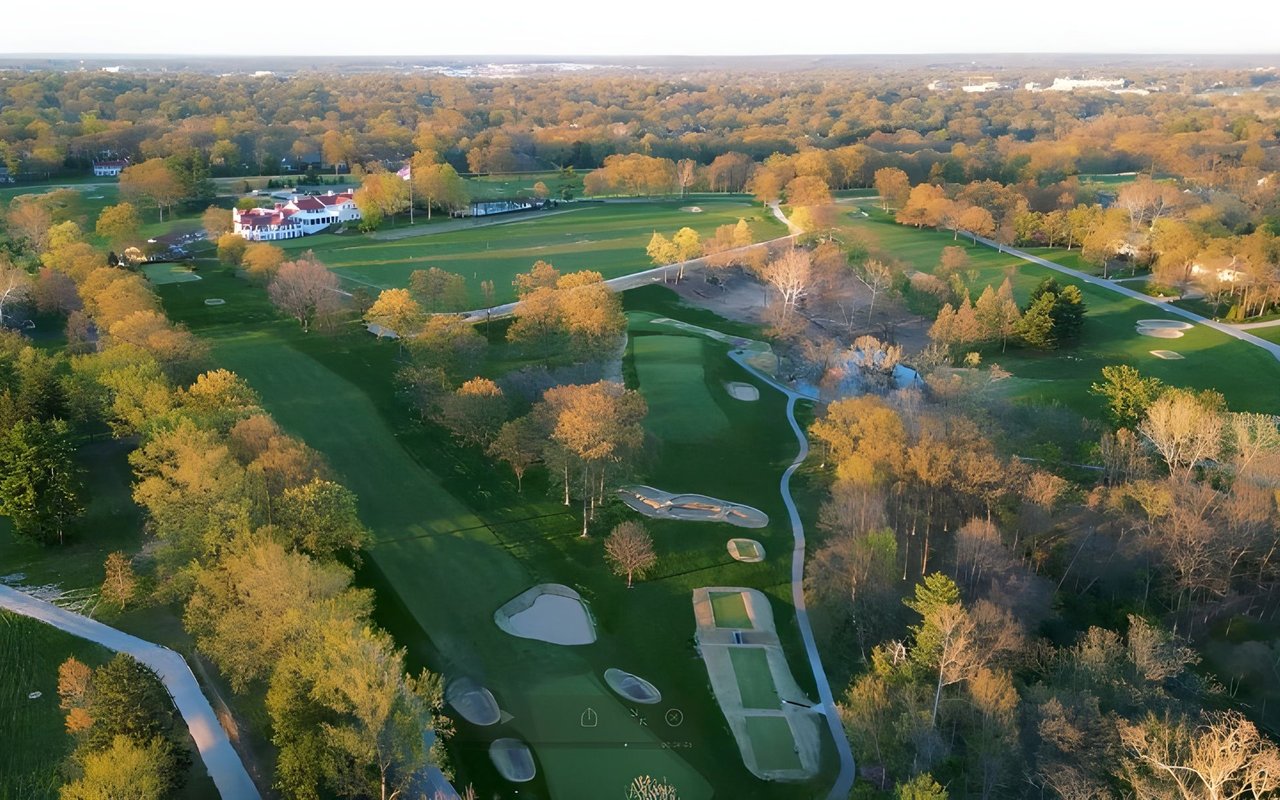
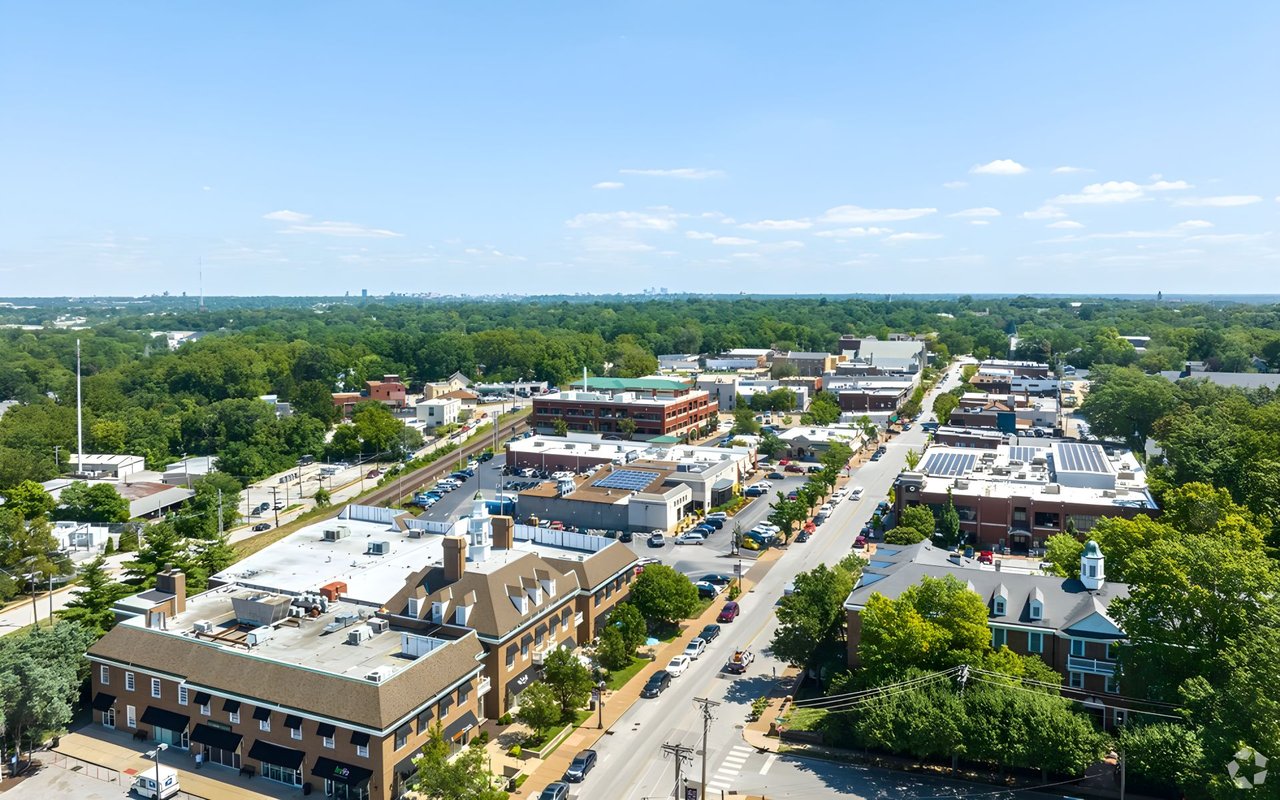
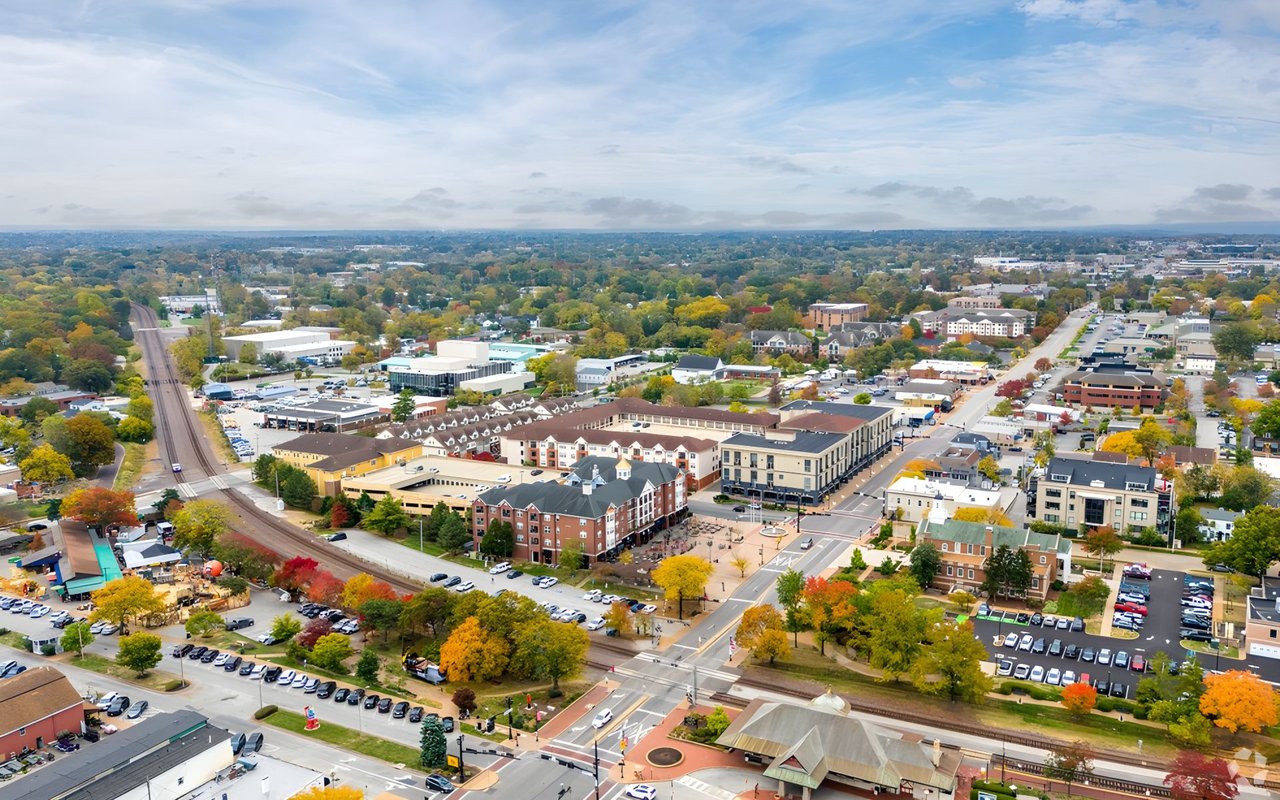
Locally, the Clayton Road corridor serves as the city's understated main street, lined with boutiques, design studios, and long-standing eateries. Along Ladue Road, centers like Ladue Crossing and Colonial Marketplace mix high-end grocers—including a Trader Joe's—with specialty fitness studios and neighborhood restaurants. Private club culture runs deep here too: Old Warson Country Club, which hosted the 1971 PGA Championship, anchors a social scene that also includes the historic and famously discreet Log Cabin Club and Bogey Club.
What truly distinguishes daily life, though, is how close the region's marquee attractions sit. Because Ladue rests along I-64/US-40 in central St. Louis County, Forest Park—home to the art museum, the zoo, the science center, and the history museum—is a five-to-ten-minute drive, as is downtown Clayton with its acclaimed dining. Plaza Frontenac, with Saks Fifth Avenue and Neiman Marcus, sits directly on Ladue's western border. Residents get the calm of a secluded suburb without surrendering the energy of the city.
Ladue's retail and culinary character is curated rather than sprawling—there are no big-box anchors here, just tightly edited centers built around high-end service, fine wine, and artisanal food. The Clayton Road corridor functions as the original "main street," its stone and brick storefronts housing interior showrooms, estate jewelers, art galleries, and designer apparel. Nearby, Colonial Marketplace carries luxury boutiques like Mister Guy and Ivy Hill, while Ladue Crossing leans toward everyday convenience anchored by Trader Joe's and Barnes & Noble. Just across the western border, Plaza Frontenac provides the flagship luxury tier, from Louis Vuitton to Tiffany & Co.
The dining scene is defined by neighborhood mainstays rather than chains. Truffles is the fine-dining cornerstone, known for modern American cooking, dry-aged steaks, and a deep wine list, with an adjoining Truffles Butchery Market offering prime cuts, artisanal cheeses, and prepared gourmet meals. 801 Local brings a polished, upscale American menu and craft cocktails, while Sportsman's Park endures as a beloved, wood-paneled institution for elevated pub fare. Mornings tend to gather at Companion Bakery for sourdough and espresso, and the family-owned Ladue Market remains a go-to specialty grocer prized for personal service and its butcher counter. Taken together, it is a food-and-shopping landscape that feels local and personal in a way large developments rarely achieve.
For a city sitting minutes from downtown, Ladue is astonishingly green. Strict residential zoning has preserved enormous stretches of open space, old-growth canopy, and protected waterways, giving the whole community a park-like feel that extends well beyond its formal parks.
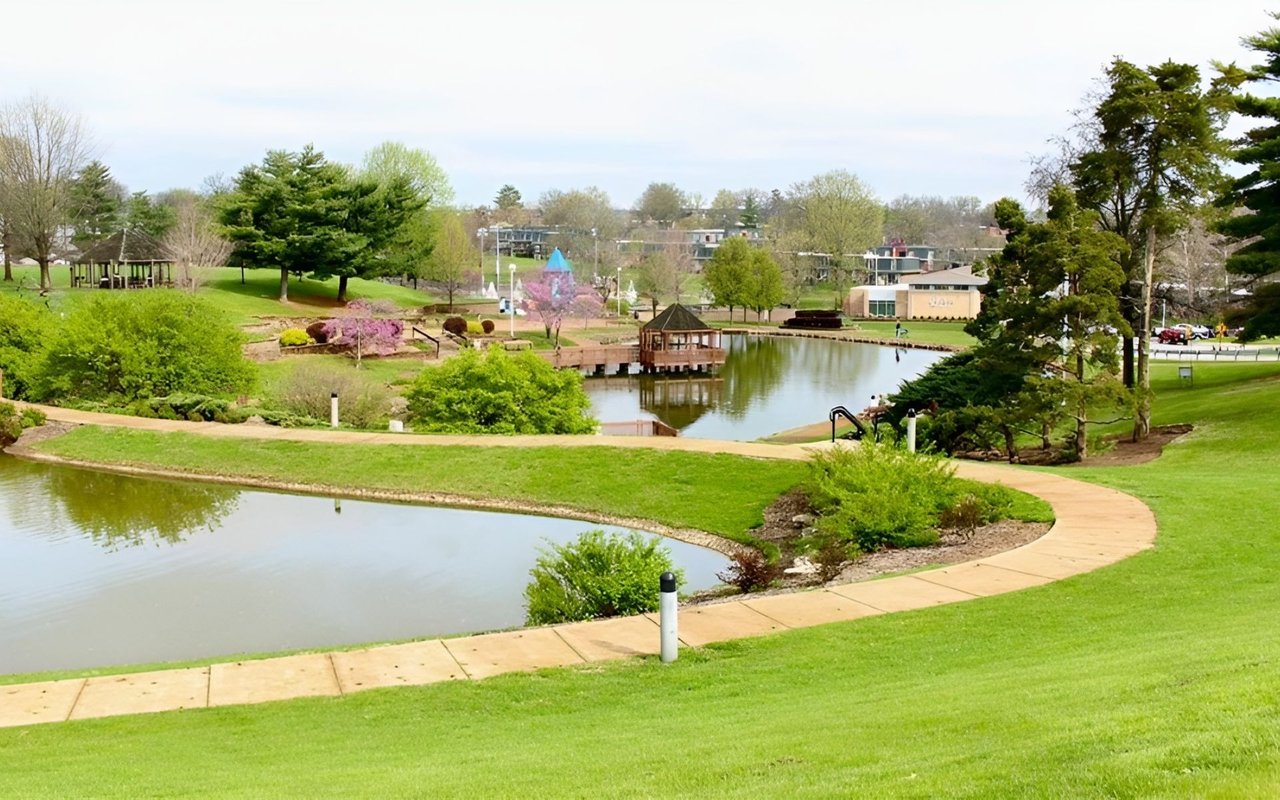
The centerpiece is Tilles Park, a 75-acre St. Louis County park along the southern edge of the city. Its paved one-mile loop, shaded picnic areas, splash pad, playgrounds, and public tennis and pickleball courts make it the community's outdoor hub year-round—and every November and December it transforms into Winter Wonderland, the drive-through holiday light display that has become a region-wide tradition. Closer to City Hall, Ladue City Park offers quiet walking paths and green commons, while the Deer Creek Greenway provides a scenic multi-use trail connecting parks, neighborhoods, and nearby campuses for walking, running, and biking.
Much of Ladue's recreation, however, happens behind the gates of its historic clubs. Old Warson Country Club features an 18-hole Robert Trent Jones course, swimming, and clay tennis courts. Right on the Ladue-Clayton border sits the St. Louis Country Club, founded in 1892 and among the oldest and most exclusive in the country, with a historic Charles Blair Macdonald course, polo grounds, and tennis. For many residents, club membership is where the social and athletic life of the community truly lives.
Location is one of Ladue's quiet superpowers. The city occupies the geographic sweet spot of central St. Louis County, sitting directly on I-64/US-40—the metro's main east-west artery—and bounded by I-170 to the east. The result is nearly frictionless access to every major employment and entertainment center in the region.
For professionals, the math is compelling. Downtown Clayton, the county's financial and government hub, is just 5–10 minutes away, meaning attorneys, executives, and finance professionals can live on acreage and still have a negligible commute. The Central West End and the BJC/Washington University Medical Center are 12–15 minutes east down I-64, a genuine draw for the region's medical and research community. Downtown St. Louis sits 15–20 minutes out, Lambert International Airport is 12–15 minutes north via I-170, and Chesterfield and West County are about 15 minutes west.
One important caveat: Ladue is car-dependent by design. To protect its residential quiet, the city has deliberately kept MetroLink stations and major bus transit centers outside its borders—neighboring Clayton handles regional transit. For buyers accustomed to walkable transit access, this is worth weighing; for those prioritizing privacy, it is a feature rather than a drawback.
Ladue is not the right fit for everyone, and part of my job is helping clients recognize honestly whether it matches how they actually want to live. It tends to suit a few distinct kinds of buyers especially well.
Families focused on education are the most common—parents who want access to Missouri's top-ranked public district or physical proximity to elite private schools like MICDS, John Burroughs, and Community School. Executives, physicians, and business owners working in Clayton, the medical campus, or downtown are another natural fit, drawn by commutes under fifteen minutes. So too are buyers who want land and privacy: where denser neighborhoods like Clayton or the Central West End offer walkability, Ladue offers 0.75-to-5-plus-acre lots, private drives, pools, and room to breathe.
Beyond that, Ladue appeals strongly to lovers of fine architecture and custom building—whether you want a historic Tudor or Georgian or a large lot on which to build a modern custom home within the city's design standards—and to club-and-community-oriented buyers who value a social life anchored around golf, tennis, and the area's storied private clubs. If several of these describe you, Ladue will likely feel like home quickly.
Buying in Ladue is meaningfully different from buying in a standard suburban development, and going in prepared can be the difference between winning the right home and losing it—or inheriting expensive surprises. Three realities shape nearly every purchase here.
First, off-market deals are common. Because many high-net-worth sellers prefer privacy, a notable share of luxury homes trade as pocket listings before ever reaching the public MLS. Access to those homes depends entirely on your agent's relationships within local luxury brokerages—which is exactly where an established local network earns its keep. Second, if you intend to renovate, add a pool, change exterior windows, or tear down and rebuild, remember that ARB approval is not guaranteed. The board reviews exterior design for scale, height, and materials, so it is wise to make offers contingent on preliminary architectural review, or to consult a local architect before removing contingencies. Layered on top of city code, nearly every subdivision also has its own deed restrictions and indentures, and subdivision trustees can hold veto power over everything from fences to paint colors to detached structures.
Finally, specialized inspections are essential. Many Ladue homes were built between the 1920s and 1960s and expanded repeatedly over the decades, so a standard inspection rarely tells the whole story. Insist on a sewer lateral scope (older clay lines are vulnerable to invasive oak and maple roots), a thorough stormwater and drainage assessment given the rolling, tree-heavy terrain, and a careful look at legacy mechanicals—slate roofs, older electrical panels, and boiler or hydronic heating systems all deserve scrutiny before you remove your inspection contingency.
Selling well in Ladue means positioning your property for well-capitalized buyers who expect high standards of condition and presentation—and who will hire top-tier inspectors of their own. Success comes down to a handful of disciplined moves.
Presentation carries outsized returns. Ladue buyers want either turnkey convenience or clear architectural integrity, and professional staging that highlights features like custom millwork, formal dining rooms, and walls of glass consistently shortens time on market. Because the grounds matter as much as the interiors here, refreshing landscaping, pruning mature trees, and correcting lawn grading can add real perceived value. Equally important is a proactive inspection and disclosure strategy. Missouri requires a comprehensive Seller's Disclosure, and ordering a pre-listing home and sewer inspection lets you address red flags on your own terms rather than mid-negotiation; transparency about past roof, basement, or foundation work builds the trust luxury buyers demand.
Two more items are non-negotiable. Ladue requires a municipal occupancy inspection and permit before a buyer moves in, and any unpermitted work—a finished basement, undocumented electrical updates—can stall a closing once inspectors review the property's history, so it is best resolved early. And pricing here is genuinely a tale of two buyers: updated, turnkey homes command top price-per-square-foot ($380–$450+), while original or dated properties are valued largely on lot and location by buyers planning a gut renovation or teardown. Pricing that second category against land value rather than finished-home comps is the single most important decision in avoiding a stale listing.
Navigating a market like Ladue—with its off-market listings, architectural review process, subdivision indentures, and two very different classes of buyers—is not something to do alone, and it is exactly the kind of work I love. I'm Ryan Patton, a licensed real estate broker in both Missouri and Illinois and the owner of Patton Properties, based in Kirkwood. I've been practicing real estate full-time since graduating from Washington University in St. Louis with a BSBA in Marketing and Management, and I also own Innovia Company, a custom homebuilder—which means I understand Ladue not just as a market, but as a place where design standards, lot value, and construction quality genuinely matter. My team brings honesty, deep local relationships, and forward-looking technology to help you buy or sell with confidence.
Whether you're weighing a move to Ladue, preparing to list a legacy estate, or simply want a candid read on the market, I'd be glad to be a resource. You can reach me directly by phone at (314) 821-8900, by email at [email protected], or at our office at 338 S Kirkwood Rd, Ste 105, Kirkwood, MO 63122. Let's talk about what you're looking for and build a plan around it.
There's plenty to do around Ladue, including shopping, dining, nightlife, parks, and more. Data provided by Walk Score and Yelp.
Explore popular things to do in the area, including The Fashion Lane, Just Chic, and Clayprice Shopping Center.
| Name | Category | Distance | Reviews |
Ratings by
Yelp
|
|---|---|---|---|---|
| Shopping | 0.32 miles | 0 reviews | 0/5 stars | |
| Shopping | 0.74 miles | 0 reviews | 0/5 stars | |
| Shopping | 0.75 miles | 0 reviews | 0/5 stars | |
| Active | 0.42 miles | 0 reviews | 0/5 stars | |
| Active | 0.6 miles | 0 reviews | 0/5 stars | |
| Beauty | 0.41 miles | 0 reviews | 0/5 stars | |
| Beauty | 0.64 miles | 0 reviews | 0/5 stars | |
| Beauty | 1.28 miles | 0 reviews | 0/5 stars | |
| Beauty | 1.4 miles | 0 reviews | 0/5 stars | |
|
|
||||
|
|
||||
|
|
||||
|
|
||||
|
|
||||
|
|
Ladue has 3,384 households, with an average household size of 2.64. Data provided by the U.S. Census Bureau. Here’s what the people living in Ladue do for work — and how long it takes them to get there. Data provided by the U.S. Census Bureau. 8,948 people call Ladue home. The population density is 1,045 and the largest age group is Data provided by the U.S. Census Bureau.
Total Population
Population Density Population Density This is the number of people per square mile in a neighborhood.
Median Age
Men vs Women
Population by Age Group
0-9 Years
10-17 Years
18-24 Years
25-64 Years
65-74 Years
75+ Years
Education Level
Total Households
Average Household Size
Average individual Income
Households with Children
With Children:
Without Children:
Marital Status
Blue vs White Collar Workers
Blue Collar:
White Collar: