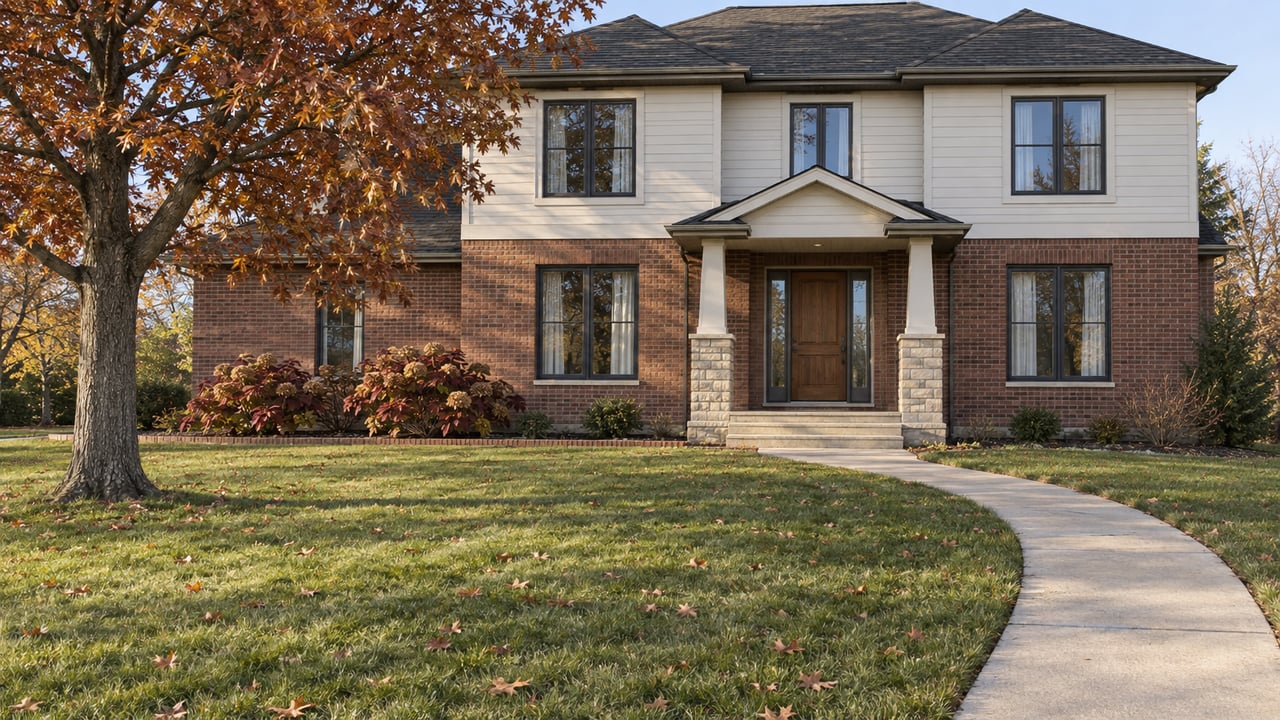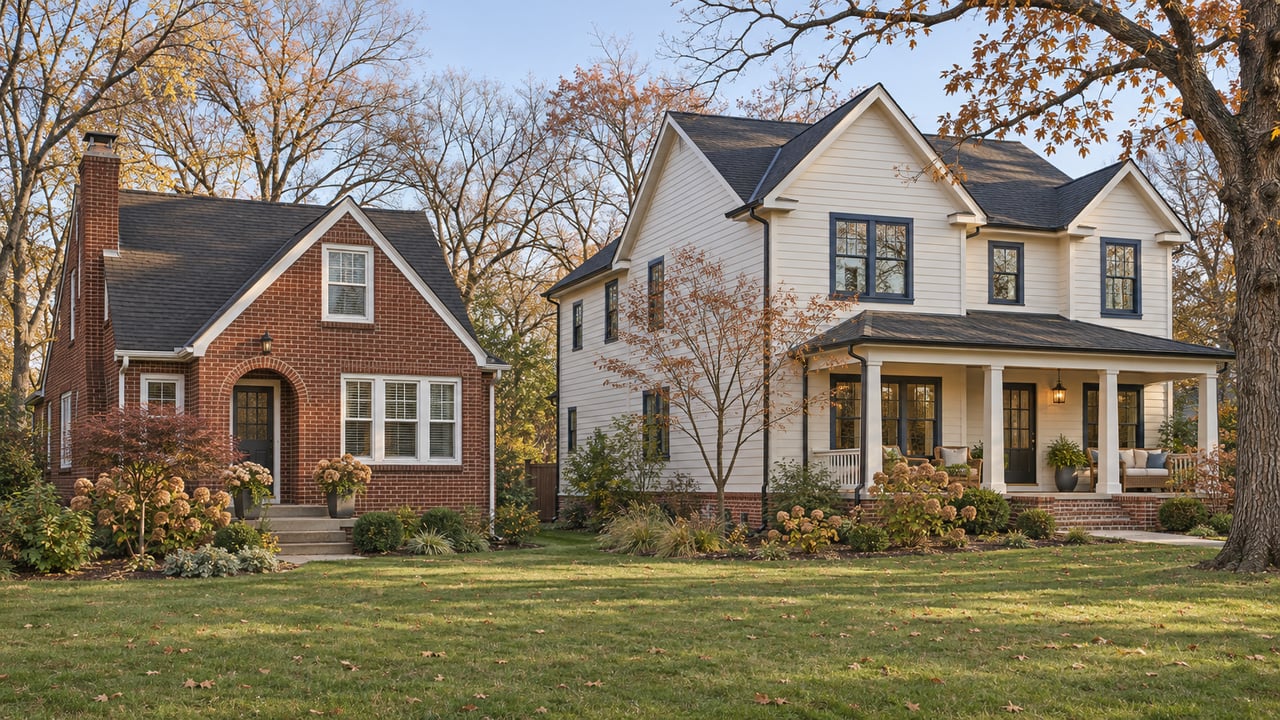
At its September 8 meeting, the Webster Groves Historic Preservation Commission heard a request to tear down an older house that its new owners had planned to restore. The owners told the commission that demolishing it and building a new single-family house would cost about $150,000 to $200,000 less than restoring it. Their architect said that restoring the old balloon frame would likely cause more problems later on. Commissioners asked about selling the house and about historic tax credits, and they tabled the request. At the same meeting, they approved a demolition request for a different house.
Those two requests describe the choice a buyer faces with an older Webster Groves house: restore it, replace it, or buy a house someone else has already replaced. The city's own records also show that this choice comes up in only some parts of town. Webster Groves rebuilds slowly, and nearly all of that rebuilding happens at its north and south ends. If you are comparing Webster with other inner-ring suburbs, where you look inside the city decides which of those three choices you are actually making.
The rebuilding happens at the edges of town
In 2025 the city published its Report on Residential Demolition Trends. It counts 277 home demolitions in Webster Groves from 2004 through 2024. A new house followed 220 of them, or 79.42%. Of the rest, 33 are still empty lots, and others were merged into neighboring lots or bought for commercial use.
The map in the report shows where these houses were. Demolitions cluster along the northern and southern edges of the city. The central corridor, where the report says property values are highest, has seen almost none. Over the past twenty years, the busiest rebuilding has been in pockets just south of East Glendale Road in South Webster and in the northwest and north-central neighborhoods. The report also notes that the north-central area has a relatively high share of demolitions that have not yet been followed by a new house.
For a buyer, the map means that a new house in Webster Groves almost always sits on a north or south side street, next to older homes that are still the originals. It also means the small older houses in those same pockets are the ones builders tend to buy. In the central corridor, the house you tour is most likely the original house, and the record suggests it will probably stay that way.
What a replacement house is, measured against the one it replaced
The report compared every demolition from 2014 through 2023 that was followed by a new house. On average, the new home was about 2.5 times the size of the one it replaced and sold for four to five times as much. The gap was widest in 2022, when new houses averaged $1,176,352 and the demolished properties averaged $187,000. In 2023, new houses averaged $995,419 and the properties they replaced averaged $212,500. In both years, the new houses were close to three times the size of the old ones.
A 2023 average near $1 million is the closest thing the city's record has to a price for new construction in Webster Groves. For a regional comparison, the median single-family sale price across the St. Louis REALTORS service area in October 2026 was $323,000, according to the association's monthly housing report. A buyer who wants new construction in Webster is shopping in a different price band from the region and from most of the older houses on the same block.
The houses that get replaced are usually modest. A May 2025 city planning memo on 814 Edgar Road describes it as a 1,118-square-foot ranch built around 1941 that passed a city occupancy inspection in January 2023. Its size, age and condition match the profile in the city's numbers: a smaller, sound house on a lot that could hold something much larger.
The price gap is smaller than the averages make it look
The report warns against reading its price comparison too literally. A demolished property's recorded sale price can be the price of the house before it came down or the price of the empty lot afterward. That makes those prices more scattered and adds outliers that can pull the yearly averages around. The authors say the size comparison is the more reliable measure. They also write that the price differences "seem much less stark when accounting for construction costs."
So the 2023 averages of $212,500 for a demolished property and $995,419 for a new house do not measure a builder's margin. The cost of demolition, design, construction and carrying the property sits between those two numbers. The September request at the commission shows the same cost pressure from a homeowner's side. On that house, with an old frame that needs extensive work, the owners estimated that restoring it would cost roughly $150,000 to $200,000 more than starting over.
For a buyer, the math works in both directions. A small older house in north or south Webster may draw interest from people who would replace it as well as from people who would live in it. A finished new house nearby carries the full cost of land, demolition and construction in its price.
Webster Groves replaces houses slowly next to its neighbors
The report put Webster's 2024 numbers next to three other St. Louis County cities. Webster Groves had 7 home demolitions that year, and 6 were followed by new construction. Kirkwood had 23, with 12 followed by new homes. Frontenac had 20, and 19 of them were rebuilt. Over 2014 through 2024, Kirkwood pulled 668 demolition permits and built 708 new single-family homes. Webster Groves had 177 home demolitions in the same period, and 147 were followed by new construction. The report treats Kirkwood's permit count with some caution because many entries do not describe what was demolished. Even so, the scale is clearly different.
The report's own conclusion is that about 275 demolitions in twenty years, in a city of roughly 10,000 households, is "not particularly unusual or concerning" given the age of Webster's housing. It also says the new homes, which cost far more than the houses they replaced, gradually reduce the city's supply of smaller, more affordable homes.
If you are deciding between Webster Groves and Kirkwood, this difference matters. In Kirkwood, a buyer who wants a newly built house in an established neighborhood has many more finished examples to choose from. In Webster Groves, the new houses are fewer, they are concentrated at the edges of town, and most homes around them are still the originals.
How the three choices compare in Webster Groves
If you want a new house in Webster Groves, you are shopping a short supply. Look first in South Webster below East Glendale Road and in the northwest and north-central neighborhoods, and expect prices near the city's 2023 average of about $1 million for new construction. According to the city's report, few of the new houses tower over the street, and very few have attached, front-facing garages.
If you want an older house and plan to renovate it, the September request shows why the structural review belongs at the front of the decision, before you settle on a budget. Those owners learned the extent of their house's problems after they bought it. Our post on renovating an older home in Webster Groves covers the kinds of houses involved. A contractor's estimate set against a structural engineer's report gives you the same comparison those owners brought to the commission.
If you want to buy a small older house and build new, you are bidding on the same houses builders look for, in the same north and south pockets. Your budget has to cover purchase, demolition and construction together, and the city's 2023 averages put the finished house near $1 million. The empty lots the report counts are a reminder that a demolition does not always lead to a new house right away.
Questions buyers ask about Webster Groves teardowns
Do the new houses look out of place? The city's report says few new homes tower over the street or look out of place, and very few have attached, front-facing garages.
Does every demolition lead to a new house? No. About one in five of the 277 demolitions from 2004 through 2024 was not followed by a new home, and 33 of those sites are still empty lots.
Is the central corridor seeing teardowns too? The report's map shows the central corridor largely untouched by demolition over the past twenty years.
Patton Properties handles brokerage, renovation, custom homes and appraisals under one roof. That helps when an older Webster Groves house could be restored, replaced, or passed over for a new one down the street. If you are weighing those options, request a valuation or contact us before you write the offer.