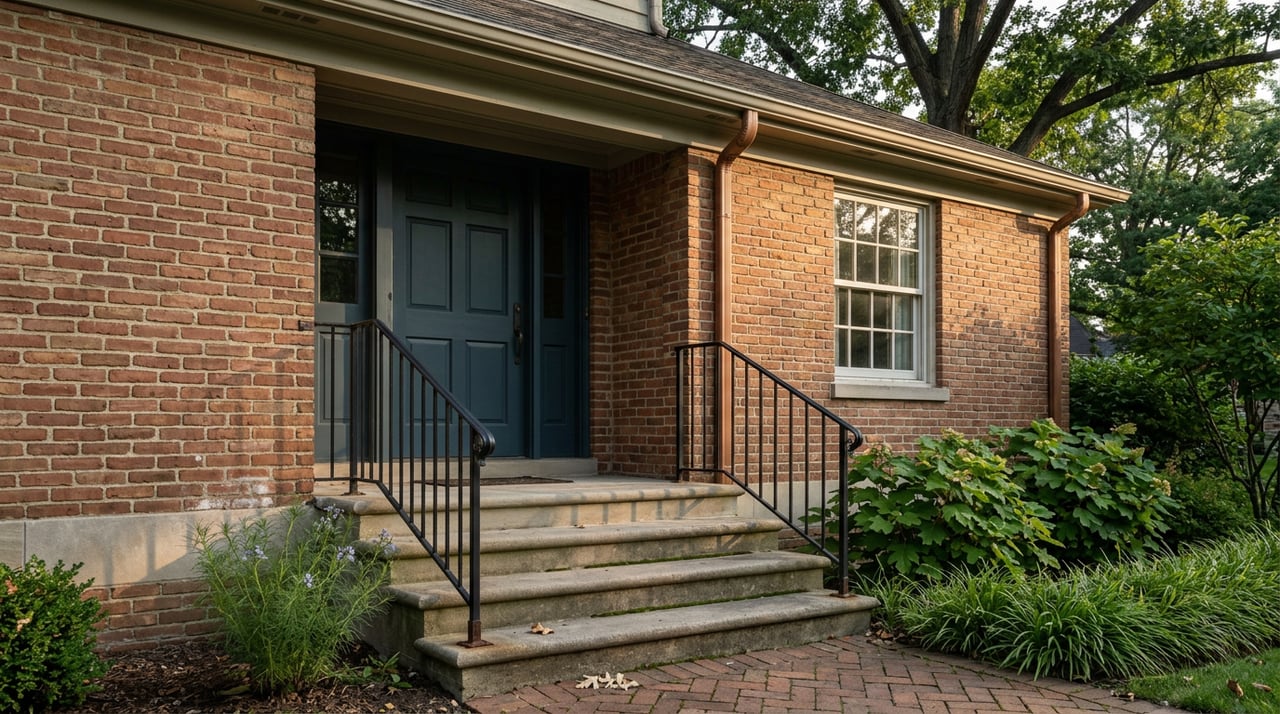
A Webster Groves seller signs a contract, survives the buyer's home inspection, negotiates a few repairs, and exhales. The deal is done. Except it isn't, not in this city. Before anyone can legally move a box into that house, Webster Groves runs its own inspection, one that has nothing to do with the buyer, the price, or anything written into the purchase agreement. It is a separate hurdle with its own checklist, its own fee, and its own timeline, and it decides whether the new owner can occupy the home at all.
Most sellers find out about it only after their agent mentions scheduling it, or worse, after a private inspector's punch list gets confused with the city's. The two lists are not the same, they are not negotiated the same way, and treating them as one is how closings get delayed in a market where homes are already moving fast.
Two inspections, two different jobs
The buyer's private inspection is a negotiating tool. It exists so the buyer can understand condition, ask for credits or repairs. Everything about it is contractual and flexible: the parties can agree to fix nothing, fix everything, or split the difference.
The city's Residential Occupancy Inspection is not a negotiation. Webster Groves requires an inspection, a Certificate of Compliance, and an Occupancy Permit any time a house or condominium changes ownership. The city inspector is not weighing what's fair between buyer and seller. The inspector is checking the house against the Property Maintenance Code, full stop, and the home cannot be occupied until the violations found are corrected.
That single distinction is the thing worth understanding before you list. A seller can absolutely sell a home "as is." Webster Groves says so directly. But "as is" governs the sale price, not the right to move in. A buyer can close on a house with a cracked foundation wall or outdated wiring and pay whatever price was negotiated for that condition. What that buyer cannot do is legally occupy the house until the city's own list of items, mostly life-safety basics, passes inspection.
What the city is actually looking at
The Residential Occupancy Inspection Guide lays out specifics, and most of it isn't cosmetic. It's the kind of maintenance detail that a home can carry for years without an owner noticing, right up until a sale forces the issue.
| Category | What the city checks |
|---|---|
| Smoke and CO detectors | One in each bedroom, one in the hallway within 10 feet of every bedroom door, hard-wired detectors interconnected with battery backup, a carbon monoxide detector outside bedrooms in any unit with gas appliances or a fireplace |
| Bathrooms | GFCI protection on every bathroom receptacle, functional exhaust fan if there's no operable window, sound and leak-free tub, toilet, and sink fixtures |
| Stairs | Any staircase with more than three risers needs a graspable, full-length handrail, with guards on open sides |
| Electrical | Properly permitted wiring, junction boxes at every splice, an electrical panel in good condition with no double lugging |
| Exterior | Trees and shrubs clear of the roofline and siding, dead trees or stumps removed, siding and foundation free of cracks, windows and screens in good repair, yard free of debris |
None of this shows up as a line item in a listing description. All of it can show up as a delay if it's discovered the week before closing instead of months before listing.
What it actually costs, in fees and in time
The mechanics are straightforward, but they carry real deadlines. The City of Webster Groves says a completed Residential Occupancy Inspection application and a $75 inspection fee are due 24 hours before the inspection, which typically takes 60 to 90 minutes. If violations turn up, as they often do in a housing stock this old, the homeowner has to schedule and pay for repairs, then request a re-inspection, which carries its own $50 fee if more than one re-inspection is needed. The City of Webster Groves says that once the house passes, the new owner still needs a separate Occupancy Permit, with its own $30 fee, before moving in.
None of these numbers are large on their own. What matters is sequencing. A seller who assumes the buyer's private inspection is the only clock running can end up scheduling the municipal inspection late, discovering a violation that needs an electrician or a contractor, and then watching the closing date slide while repairs and a re-inspection get scheduled.
That sequencing risk matters more this year than it might have a few years ago. As of a market update covering the summer of 2026, well-kept Webster Groves homes were going under contract in roughly two weeks, with about 114 homes selling over the trailing twelve months against only 45 to 60 active listings at any given time, and a median price per square foot near $261. A market moving that fast has very little slack built in for a surprise trip to City Hall.
The historic district wrinkle
Webster Groves has real housing-stock diversity, from early-1900s bungalows to brick Tudors to mid-century ranches, much of it concentrated in and around designated historic districts. That character is part of why buyers want in. It's also why some sellers face an extra layer before they can even fix what the occupancy inspection flags.
If a home sits inside a historic district or carries a City-designated Historic Landmark status, any new construction or renovation work affecting the exterior appearance of the main building has to go through the Architectural Review Board before the Building Commissioner will approve it. The ARB is made up of five licensed architects and one landscape architect, and it meets on the first and third Thursdays of the month. That's a real calendar constraint. A seller who needs to replace deteriorated siding or repair a porch rail to satisfy the occupancy inspection, and whose house happens to sit in a historic district, may need ARB sign-off on the repair itself before the repair can happen.
None of this means historic-district sellers face impossible odds. It means the timeline has one more checkpoint than a seller outside those boundaries, and that checkpoint runs on the city's meeting schedule, not the closing date in the purchase contract.
What this means if you're listing soon
The practical takeaway isn't complicated, even if the code language is dense. Have the occupancy inspection done, or at least walk the checklist yourself, before you list rather than after you're under contract. Life-safety items like smoke detectors, GFCI outlets, and handrails are inexpensive to fix on your own timeline and expensive to fix on a buyer's timeline. If your home falls inside one of Webster Groves' historic districts, build in extra weeks for any exterior repair that might need Architectural Review Board review, since that board doesn't meet every week.
And when you're writing or reviewing the purchase contract, be explicit about who handles the occupancy inspection and who pays for what it turns up. Missouri sellers can list a home as is, but "as is" is a pricing decision between two private parties. It does not exempt anyone from the city's own pass-fail requirement for moving in.
A few questions sellers ask
Does passing the buyer's private inspection mean I've also passed the city's inspection? No. They check different things for different reasons, and passing one has no bearing on the other. The buyer's inspector reports to the buyer. The city's inspector reports to the Property Maintenance Code.
Can I still sell my home as is if I know it won't pass the occupancy inspection? You can negotiate the sale as is, meaning the price reflects the home's condition. What you cannot do is let a buyer occupy the home before the violations found in the occupancy inspection are corrected, regardless of what the sale price assumed.
What if my home is in one of Webster Groves' historic districts? Any exterior work, including repairs the occupancy inspection might require, generally needs review by the Architectural Review Board before it proceeds, since the board reviews new construction and renovation work affecting the main building's exterior appearance ahead of Building Commissioner approval. Plan repair timelines around the board's regular meeting schedule.
Selling a Webster Groves home involves more moving parts than the purchase contract alone, and the pieces that catch people off guard are usually the ones nobody thinks to ask about until they're already under contract. If you're weighing when to list, what to fix first, or how a historic designation might affect your timeline, Ryan Patton has spent 25 years working through exactly this kind of local detail with Webster Groves sellers. Contact us before you list, not after the clock starts.
This article is general information, not legal, tax or financial advice. Consult a qualified professional about your situation.