If you are drawn to clean lines, big windows, and easy one-level living, Crestwood is one of the most interesting places to look in the St. Louis area. The city’s housing stock is deeply tied to postwar design, which means mid-century ranches and split-level homes are not rare finds here. If you want to understand what these homes look like, what they typically cost, and which updates make sense, this guide will help you sort through the details. Let’s dive in.
Why mid-century homes matter in Crestwood
Crestwood’s residential identity is closely connected to homes built in the middle of the 20th century. The city notes that much of its housing was constructed during those postwar decades, and many of those homes are mid-century ranches. That makes this style a defining part of the local market, not just a design niche.
The city’s own description of Crestwood points to tree-lined streets, charming midcentury homes, and newer infill as key parts of the housing pattern. In other words, when you shop in Crestwood, you are often looking at a market where original architecture still shapes both curb appeal and buyer expectations. That is important whether you plan to buy, sell, or renovate.
One of the strongest examples is Ridgewood. Crestwood says the neighborhood includes more than 250 early-1950s homes designed by Ralph Fournier and built by Burton Duenke, and describes it as one of the best-preserved Mid-Century Modern neighborhoods in the country.
The city is also exploring preservation efforts in Ridgewood, including possible design guidelines for new construction and substantial additions. That tells you something important about Crestwood’s market. Mid-century character is not just part of the past here. It is part of how the city sees its future.
What Crestwood mid-century homes look like
Most buyers in Crestwood will come across two common mid-century forms: ranches and split-levels. Both grew out of postwar design trends, but they live differently day to day.
Ranch homes in Crestwood
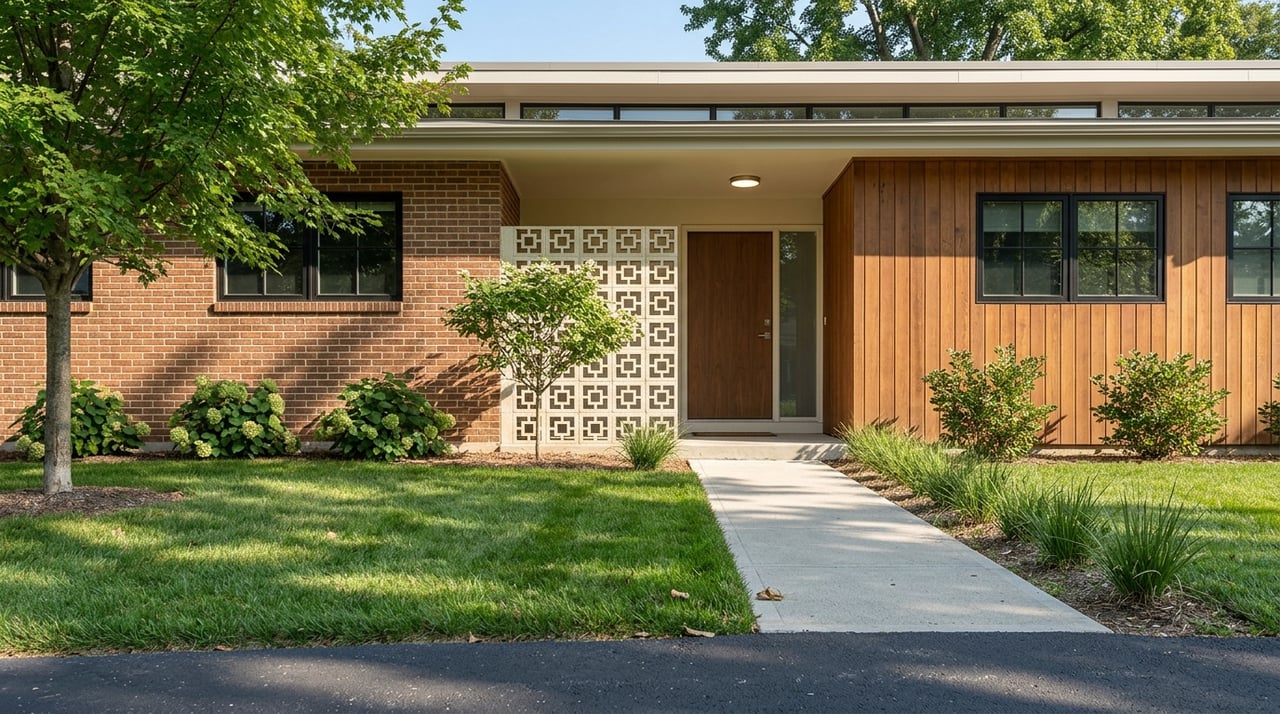
A Crestwood ranch is usually easy to recognize. It tends to have a long, low shape, wide eaves, and a simple layout that puts daily living first. These homes were designed around comfort and function rather than formal room separation.
Typical ranch layouts often include three bedrooms, an open floor plan, an eat-in kitchen, and a large living room. Large picture windows and sliding glass doors are also common. Those features help create the bright, casual feel that many buyers still want today.
Some ranches may also include patios, courtyards, or carport-style elements. Even when the finishes are dated, the underlying design often has strong appeal because of its natural light, straightforward flow, and easy connection between indoor and outdoor space.
Split-level homes in Crestwood
Split-level homes offer a different kind of functionality. Instead of everything on one floor, they separate living areas across staggered levels. That can create useful separation without requiring a much larger footprint.
A typical split-level places the kitchen, dining, and living spaces on the middle level. Bedrooms are often on the upper level, while the lower level may include a garage and family room. The exterior is usually more asymmetrical than a ranch, with low-pitched hip or gable roof forms.
For buyers who want some separation between entertaining space, sleeping space, and everyday hangout areas, a split-level can be a smart fit. For sellers, that layout can also be a selling point when the lower-level family room or garage access has been refreshed.
Why Ridgewood stands out
Ridgewood is especially notable because its homes were built with post-and-beam framing, prefabricated exterior panels, and interior non-load-bearing partitions. That construction allowed more flexibility in layout and configuration than many homes from the same era.
That matters today because some Crestwood mid-century homes can support thoughtful reconfiguration without losing their identity. If you are weighing whether to buy a home that needs work or deciding how much to update before selling, flexibility like that can create real value.
What mid-century homes cost in Crestwood
Crestwood’s market is currently centered in the mid-$300,000s. Zillow reports an average home value of $348,022 as of May 31, 2026, and Redfin reports a median sale price of $350,290 for the three months ending in May 2026. Those numbers give you a useful baseline if you are trying to estimate where a mid-century home may fall.
The market also appears to be moving quickly. Redfin reports homes sell in about 9 days on average, with hot homes going pending in about 3 days, while Realtor.com reports a 101% sale-to-list ratio in May 2026. Taken together, those signals suggest buyers should be prepared to act decisively and sellers should pay close attention to pricing and presentation.
Practical Crestwood price ranges
Here is a simple way to think about current pricing for Crestwood homes, including many mid-century properties:
| Price range | What you may see |
|---|---|
| Below $300K | Smaller or lightly updated ranches |
| Around $350K | The center of today’s Crestwood market |
| $440K and up | Larger homes or more extensively renovated properties |
Recent market examples help illustrate those ranges. Current Crestwood listings have included a 3-bedroom, 1-bath ranch at $250,000, a 3-bedroom, 2-bath home built in 1956 at $365,000, and larger or more renovated homes at $440,000 and $509,900.
These are not fixed tiers, but they are useful guideposts. In practice, price will often come down to condition, layout, location within Crestwood, and whether updates improve the home without stripping away its original appeal.
Which updates add the most appeal
When you own a mid-century home, the goal is usually not to make it look brand new in a generic way. In Crestwood, buyers often respond to the style itself. Zillow’s buyer-demand analysis found midcentury homes see about a 13% lift in engagement, which suggests character can be part of the value.
That means the best updates usually balance freshness with preservation. You want the home to feel clean, bright, and move-in ready, while still reading as the kind of home buyers came to Crestwood to find.
Keep the original character where possible
National Park Service guidance recommends retaining the basic floor plan and character-defining features when possible. That can include original doors, windows, trim, floors, fireplaces, and distinctive hardware.
For sellers, this does not mean every old feature should stay no matter what. It means you should be careful about removing the very details that give the home its identity. A well-kept original feature can often do more for buyer interest than a trendy replacement.
Focus on the rooms buyers notice first
For sellers preparing to list, staging and presentation still matter. NAR’s 2025 staging report says the rooms buyers care about most are the living room, primary bedroom, and kitchen. The same report says sellers’ agents most often recommend decluttering, cleaning, and curb appeal work.
Those priorities make a lot of sense for Crestwood mid-century homes. Buyers often form their first impression from light, openness, and overall flow. If those strengths are buried under clutter, heavy decor, or worn finishes, the home can lose momentum fast.
Targeted updates usually beat total overhauls
In many Crestwood ranches and split-levels, focused improvements are more effective than a full gut renovation. High-visibility exterior updates like windows, roof color or material, exterior lighting, and garage doors can noticeably improve first impressions.
Inside, neutral paint, simple finishes, and restrained decor tend to work better than trend-heavy choices. The goal is to help buyers imagine living there while letting the architecture stay front and center.
Smart update priorities for buyers and sellers
If you are deciding where to spend money, these areas often offer the best return in appeal:
- Living room refreshes that highlight natural light and open space
- Kitchen improvements that feel clean and functional without overcomplicating the design
- Bathroom updates that improve daily use while staying visually simple
- Window and lighting upgrades that support the home’s light-filled character
- Curb appeal work such as landscaping, exterior lighting, and entry cleanup
- Garage door or exterior-detail updates for split-level and ranch façades
For many homes, the best strategy is not doing more. It is doing the right things in the right places.
What buyers should watch for
If you are shopping for a mid-century home in Crestwood, look past surface finishes and pay attention to the structure of the home’s design. A bright ranch with an older kitchen may offer more long-term value than a heavily remodeled house that lost its original flow.
You should also think carefully about layout. Ranches often appeal to buyers who want one-level living and simple circulation. Split-levels may fit you better if you want more separation between living zones.
Because the local market moves quickly, it helps to know your priorities before you start touring homes. Decide which original features matter to you, where you are open to updates, and how much renovation work you are truly comfortable taking on.
What sellers should remember
If you own a Crestwood mid-century home, your property may have built-in appeal simply because it fits the city’s housing story so well. The style is familiar, recognizable, and in demand. Your job is to present that appeal clearly.
That starts with pricing realistically within today’s market and making thoughtful improvements before listing. Clean presentation, selective updates, and respect for the home’s original character can help buyers connect with it faster.
This is also where experienced guidance matters. When a home has architectural identity, the pricing and prep strategy should account for more than square footage alone. It should also reflect design, condition, and what today’s buyers are responding to in Crestwood.
If you are weighing whether to buy, renovate, sell as-is, or make targeted improvements first, working with an advisor who understands both valuation and property updates can make the process clearer. For help planning your next move in Crestwood, connect with Patton Properties.
FAQs
What styles define mid-century homes in Crestwood, MO?
- In Crestwood, mid-century homes are most often ranches and split-levels built during the postwar period, with features like low rooflines, wide eaves, functional layouts, and large windows.
What is the average price of a home in Crestwood, MO?
- Zillow reports an average home value of $348,022 as of May 31, 2026, and Redfin reports a median sale price of $350,290 for the three months ending in May 2026.
What price range should you expect for a Crestwood mid-century ranch?
- Current market examples suggest smaller or lightly updated ranches may fall below $300,000, while many homes near the center of the market are around $350,000 and larger or more renovated homes can start around $440,000.
What updates help a mid-century home sell in Crestwood, MO?
- The most useful updates are usually decluttering, cleaning, curb appeal work, and targeted improvements to living areas, kitchens, baths, windows, lighting, and exterior details while preserving original character where possible.
Why is Ridgewood important to Crestwood mid-century architecture?
- Ridgewood is a standout Crestwood neighborhood with more than 250 early-1950s homes designed by Ralph Fournier and built by Burton Duenke, and the city identifies it as one of the best-preserved Mid-Century Modern neighborhoods in the country.